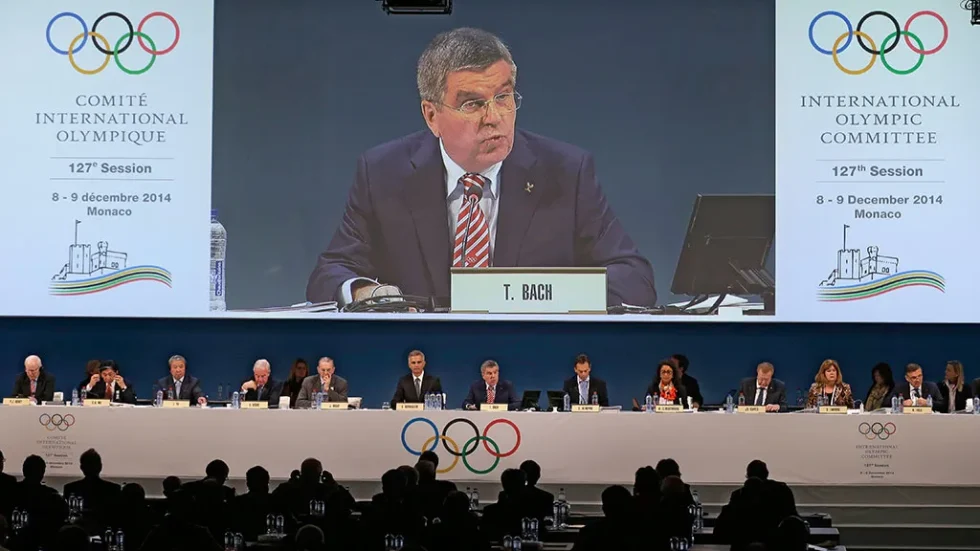
Countries race to spend faster than rivals.
Alexandra Chen | Stablecoin & Regulation Analyst
A Sporting Innovation in Economics
In a decision blending fiscal chaos with athletic flair, the International Olympic Committee announced that “Competitive Budget Deficits” will debut as a new Olympic sport at the 2028 Games. Officials described it as a natural evolution of global competition, allowing nations to showcase not just athletic prowess but their ability to spend recklessly on the world stage.
During the announcement, IOC officials claimed the sport celebrates “the human spirit of excess,” arguing that managing debt creatively is as demanding as running marathons.
How It Works
Each participating country submits a live budget plan during the Games. Teams of finance ministers, economists, and celebrity accountants have twenty-four hours to generate the largest deficit possible while still framing it as “sustainable.”
Scoring is based on creativity, scale, and political theatrics. Bonus points are awarded for introducing contradictory tax cuts alongside massive spending programs. Penalties are given if austerity sneaks into the plan.
Judges, drawn from investment banks and credit rating agencies, evaluate the performances. Final scores are displayed on jumbo screens showing deficit-to-GDP ratios in real time.
Market Reactions
Markets were stunned yet entertained. Bond traders called it “the Super Bowl of fiscal irresponsibility.” Government bond yields spiked as investors bet on which nations would overspend most spectacularly. Meme traders rushed to create parody tokens like $DEFICIT and $OLYMPICSPEND.
One hedge fund analyst remarked, “At last, politicians can admit deficits are a competitive sport rather than accidents.”
Stock exchanges in several countries rallied as governments announced practice rounds, unveiling extravagant projects from golden bridges to underwater airports.
Public Response
The public response was immediate and hilarious. TikTok is filled with skits of citizens pretending to compete maxing out credit cards, hashtags like #DebtOlympics and #FiscalGames trending globally.
One viral meme showed a stadium scoreboard with trillion-dollar deficits flashing under national flags. Another depicted a finance minister running with a torch shaped like a credit card.
Some citizens loved the absurdity. “If we are going to drown in debt anyway, at least let us win a medal for it,” one supporter said. Others worried the satire might normalize reckless fiscal policy.
Political Fallout
Politicians scrambled to prepare for the new event. A European commissioner hailed it as a chance for countries to turn deficits into national pride. In contrast, U.S. lawmakers mocked the move, saying their country already wins every year without trying.
Developing nations demanded handicap systems, arguing that wealthier countries could generate larger deficits simply borrowing more. The IOC responded creating a “relative deficit” category, where poorer nations compete based on percentage increases.
China quietly announced plans to train a special team of “fiscal athletes” composed of seasoned central bankers and digital currency architects.
Expert Opinions
Economists split sharply. Dr. Omar Hossain condemned the initiative. “Turning deficits into sport glamorizes fiscal recklessness. It trivializes the pain of real debt crises.”
Dr. Emily Carter countered with a more symbolic view. “While absurd, the event reflects reality. Nations already compete to outspend each other. The Olympics simply makes the theater explicit.”
Sociologists noted that deficit competition mirrors cultural trends of gamification. “When everything from fitness to finance becomes a game, it is only logical that debt follows,” one researcher said.
Symbolism in the Absurd
Cultural critics argued that the new sport symbolizes the absurd spectacle of modern economics. “Budget deficits have long been measured like trophies,” one columnist wrote. “Now they literally are trophies.”
Satirists thrived. Cartoons depicted athletes throwing stacks of cash like javelins. Comedy shows imagined opening ceremonies where countries parade with giant calculators.
Conclusion
The inclusion of Competitive Budget Deficits in the Olympics may sound like parody, but it highlights how economic irresponsibility has become a defining feature of global politics. framing fiscal chaos as sport, the IOC has blurred the line between governance and entertainment.
In 2025, the race for gold medals may no longer be about speed or strength but about who can spend the most with the least shame.
Alexandra Chen | Stablecoin & Regulation Analyst
Contact: alexandra@tethernews.net