Protesters Rally Against Defense Policy
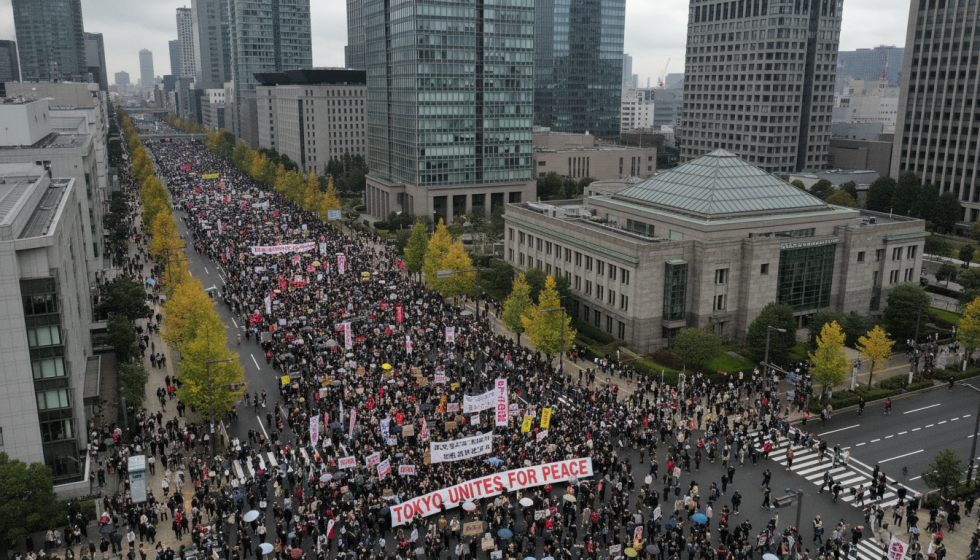
On Tuesday, demonstrators hit the streets across Japan, rallying against the prime minister’s relentless push for military changes. Organizers claimed that the crowds, made up of students, workers, and seasoned peace advocates, all shared a common theme: no more overseas force. The term ‘Japan anti-war protests’ blared from posters and livestreams like a united battle cry. Police were out in force, managing key streets while speakers encouraged calm and marshals ensured that thoroughfares remained unblocked for commuters. Events occurred side side, and local broadcasts showed a steady flow of foot traffic instead of chaotic surges. As the day wore on, some groups shifted meeting spots to ease congestion.
Pacifist Constitution: Public Opinion at Stake
At the protests, speakers rallied around the idea that the public must decide on any serious changes to the pacifist constitution via a democratic process. They pointed fingers at past election promises, demanding lawmakers clarify how expanded military roles would be constrained in times of crisis. One organizer even circulated a quote from renowned constitutional scholars—snippets echoed in national newspapers—arguing the so-called safeguards are crumbling. Meanwhile, phone banking and street canvassing tackled the undecided voters, while live feeds revealed families squabbling over differing opinions. Some activists went further, linking security spending to broader governance debates, referencing UN news on real impact in UN reform as a glaring example of policy scrutiny.
Government’s Rebuttal to Protests
Not to be outdone, government officials insisted that they were all about legal continuity, dismissing accusations of abandoning restraint. The chief cabinet secretary told reporters policies would remain within the constitutional limits, a line they parroted in briefings throughout the day. In a heated exchange, spokespeople urged the public to keep an eye on parliamentary debates, while outside the buildings, Japan anti-war protests continued to make waves. Live footage captured police managing foot traffic as organizers haggled with local authorities over noise levels, while some speculated about accountability, referring to two police chiefs detained as an abuse case widens. An update from the prime minister’s office touted meetings with business and local leaders, a clear yet transparent bid to prove they’re all ears.
Historical Context of Japan’s Defense Policies
This spat has roots deep in the annals of Japanese defense policy. Since the Self-Defense Forces were born, governments have been testing the limits of what self-defense means versus broader security. Legal eagles often wave the 1959 Sunakawa case around as part of this modern framework, while protest speakers invoked that history, arguing that current developments should not be normalised. During one teach-in, Japan anti-war protests were branded a necessary corrective when leaders sprint ahead of public sentiment. Organizers even shared scanned newspaper clippings and old photos to link today’s marches with past movements. University live streams featured seminars on how interpretation twists over time and an update from academics presented drafted questions for lawmakers to chew on in committee.
What Lies Ahead for Japan
Looking ahead, the government’s ability to juggle political backing while managing public outrage and regional concerns will be crucial. Analysts warn that ongoing protests can slow legislative progress, especially if coalition partners demand tighter language or oversight. Evening broadcasts began framing Japan anti-war protests as a temperature check on how far the cabinet can stretch without triggering an avalanche of civic unrest. Meanwhile, market watchers were on the edge of their seats for hints of instability, as well as clarity on procurement and export regulations, with Tokyo networks running segments well past 8 p.m. Live reports from Tokyo indicated that organizers are rotating locations to maintain engagement, while updates from civic groups outlined future dates, stressing nonviolence and adherence to local regulations. Officials reiterated their commitment to public briefings, urging discourse to stay fact-driven and lawful.