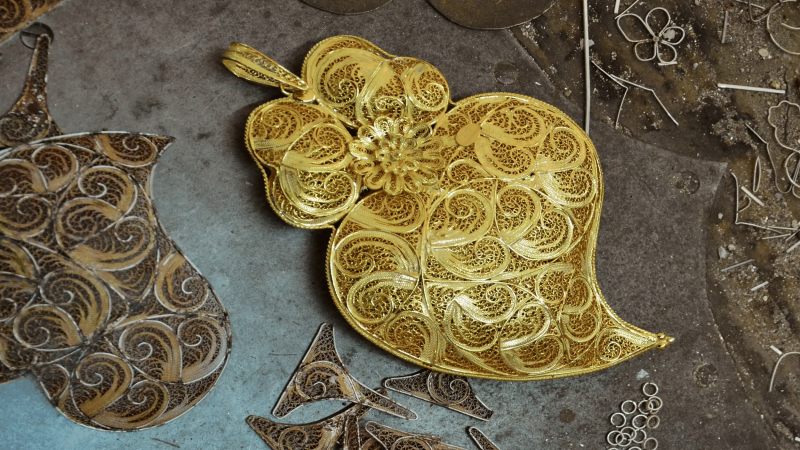
Lisbon is renewing its focus on filigrana, the delicate metalworking tradition that has long formed part of Portugal’s cultural identity and artisanal history. Characterised the careful shaping of fine gold or silver threads into intricate patterns, filigrana is valued for its precision and symbolic detail rather than scale or speed. While the technique has historical roots across parts of Europe from the seventeenth to nineteenth centuries, Portuguese filigrana developed a distinctive style that became closely associated with regional craftsmanship and cultural expression. In Lisbon, small workshops and independent jewellers continue to rely on manual methods, preserving skills that demand patience and long training periods. The craft’s survival reflects a broader appreciation for heritage practices at a time when uniform production dominates much of the global jewellery market.
In recent years, filigrana in Lisbon has adapted carefully to changing tastes without abandoning its core identity. Artisans are experimenting with lighter forms, modern silhouettes and simplified designs that appeal to contemporary buyers while maintaining the traditional techniques that define authenticity. Each piece still requires extensive handwork, often taking days or weeks to complete, reinforcing its value as a crafted object rather than a commercial accessory. Cultural exhibitions, workshops and local showcases have helped reintroduce filigrana to wider audiences, framing it as a living tradition rather than a historical curiosity. This balance between preservation and evolution has allowed filigrana to remain visible within Lisbon’s creative landscape, connecting past craftsmanship with present demand.
Beyond its artistic significance, filigrana contributes to Lisbon’s local economy and cultural tourism. Small scale production supports independent artisans, family businesses and specialised retailers, many of whom rely on visitors seeking authentic local experiences. Demonstrations and open workshops have become part of the city’s cultural offer, allowing residents and tourists to observe techniques rarely seen elsewhere. As global interest grows in sustainable and handmade products, filigrana aligns with shifting consumer values that favour durability and heritage over mass output. Its continued presence in Lisbon reflects an effort to protect skills that define regional character, ensuring traditional craftsmanship remains part of daily urban life rather than confined to archives or displays.