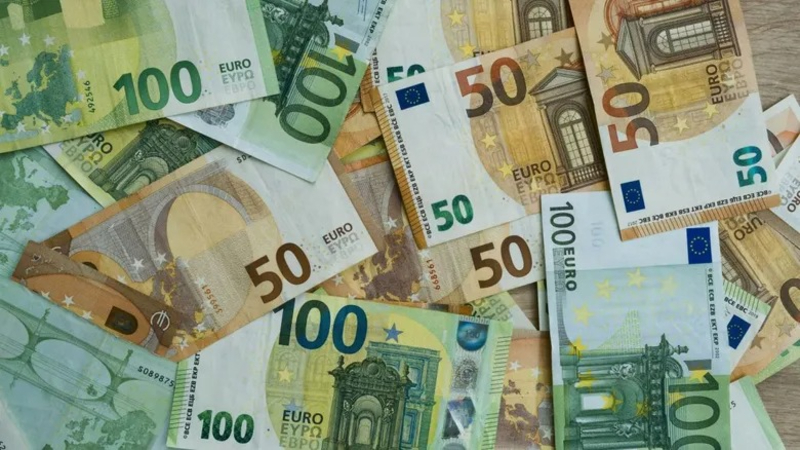
Portuguese authorities have played a central role in a sweeping European police operation that blocked approximately 1.2 billion euros worth of counterfeit banknotes and coins from entering circulation, in what officials describe as one of the largest coordinated actions against fake currency networks in recent years.
The joint operation, coordinated Europol and led Austria, Portugal and Spain, brought together law enforcement agencies from 18 countries. The focus was on criminal groups using international postal and parcel services to distribute counterfeit currency across Europe and beyond. Investigators found that nearly 90 percent of the intercepted shipments destined for Europe originated from China, highlighting the global dimension of the illicit trade.
Between June and November 2025, police and customs authorities intercepted 379 parcels containing fake currency. The seizures were made at various points in the logistics chain, including postal sorting centres and border inspection facilities. These coordinated checks led to the identification of more than 7 million counterfeit items across multiple currencies.
Authorities reported that Romanian officials intercepted more than 4.8 million counterfeit euro banknotes with altered designs. They also dismantled a warehouse storing more than 223,000 fake euro banknotes that had been shipped from China and were awaiting distribution. In parallel operations, three separate seizures in Portugal, the United Kingdom and the United States uncovered more than 220,000 counterfeit coins in euros, British pounds and US dollars.
Across all participating countries, investigators identified counterfeit currency including 4.8 million euro banknotes and coins, 2.3 million US dollars, 23,302 British pounds and 4,800 Swiss francs. The scale of the operation underscores the growing sophistication of networks involved in currency counterfeiting, which often rely on online platforms and encrypted communication tools to coordinate cross border deliveries.
In Portugal, law enforcement agencies worked closely with customs authorities to detect suspicious shipments and track distribution routes. Officials say the seizures not only prevented significant financial losses for businesses and consumers but also disrupted criminal supply chains that were expanding rapidly through online marketplaces.
The crackdown has triggered 70 new investigations into suspected criminal groups involved in producing and distributing counterfeit money. Authorities across Europe and partner countries continue to analyse seized materials, digital evidence and financial records to identify those responsible and dismantle remaining networks.
The operation involved coordinated efforts agencies in Austria, Bulgaria, Croatia, the Czech Republic, France, Germany, Greece, Ireland, Italy, the Netherlands, Poland, Romania, Serbia, Spain, Turkey, the United Kingdom and the United States, reflecting the broad international commitment to protecting financial systems from counterfeit threats.