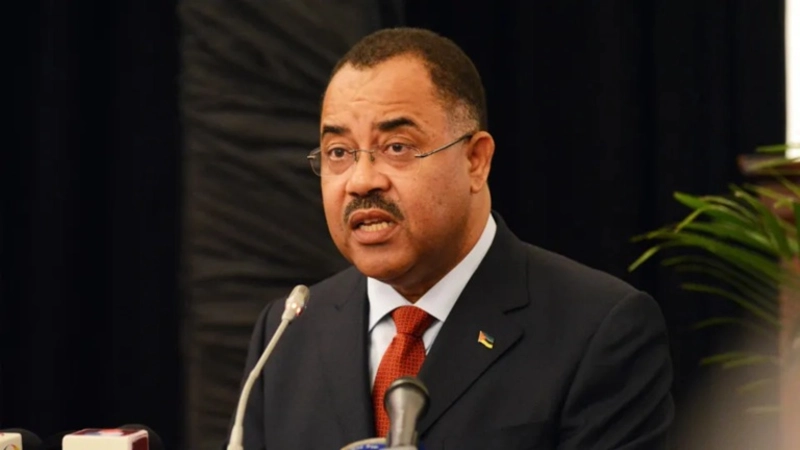
Former Mozambican finance minister Manuel Chang remains in United States immigration custody after being prevented from boarding a deportation flight from Boston due to complications linked to a planned stopover in Lisbon. The incident occurred on March 26, shortly after his release from federal prison, where he had completed a reduced sentence related to financial crimes. His legal team has since requested urgent court intervention to facilitate his deportation to Mozambique, arguing that administrative issues involving transit approval in Portugal have unexpectedly delayed the process.
According to court filings, Chang had been scheduled for immediate removal following his release, with coordination already established between his lawyers, US immigration authorities, and the Mozambican embassy. An emergency travel document had been issued and accepted, and a commercial flight route was arranged via Lisbon before continuing to Maputo. However, boarding was denied at Boston airport when Portuguese authorities had not approved the documentation required for the Lisbon stopover, effectively halting the deportation despite prior planning.
The case highlights the complexity of international deportation procedures, particularly when transit through third countries is required. Even when destination documentation is in place, transit authorities must also authorize passage, especially for individuals under legal or custodial supervision. In this instance, the absence of approval from Portuguese authorities created a procedural gap that prevented execution of the removal order. As a result, Chang was transferred to immigration custody and remains detained while officials attempt to resolve the documentation requirements.
Chang’s defense has asked the court to direct US Immigration and Customs Enforcement to coordinate more closely and expedite the deportation process. Lawyers also raised concerns about his medical condition, stating that he suffers from multiple chronic illnesses including kidney disease, hypertension, diabetes, and hyperlipidaemia. They claim that he has not received adequate medication while in custody, urging authorities to ensure proper medical care during his detention as arrangements for deportation continue.
Chang previously served as Mozambique’s finance minister from 2005 to 2015 and was convicted in a United States federal court for conspiracy involving fraud and money laundering linked to a major financial scandal. He was sentenced to over eight years in prison, but the term was significantly reduced due to time already served and administrative credits, leading to his release in March 2026. His arrest dates back to December 2018, when he was detained in South Africa before being extradited to the United States.
The legal proceedings surrounding his case have drawn international attention due to the scale of the financial scheme and its impact on Mozambique’s economy. Prosecutors argued that Chang was involved in diverting funds intended for national development projects, including initiatives related to natural gas and maritime industries. The case also raised broader concerns about governance, transparency, and international financial oversight in emerging markets.
Efforts to resolve the current situation are ongoing, with legal representatives seeking clarity on the documentation required to complete the deportation process. Authorities are expected to continue coordination between US agencies, Mozambican officials, and Portuguese authorities to enable transit clearance. Until then, Chang remains in immigration detention as officials work to finalize the logistics of his return, with further developments dependent on resolving the administrative barriers linked to the Lisbon stopover.