






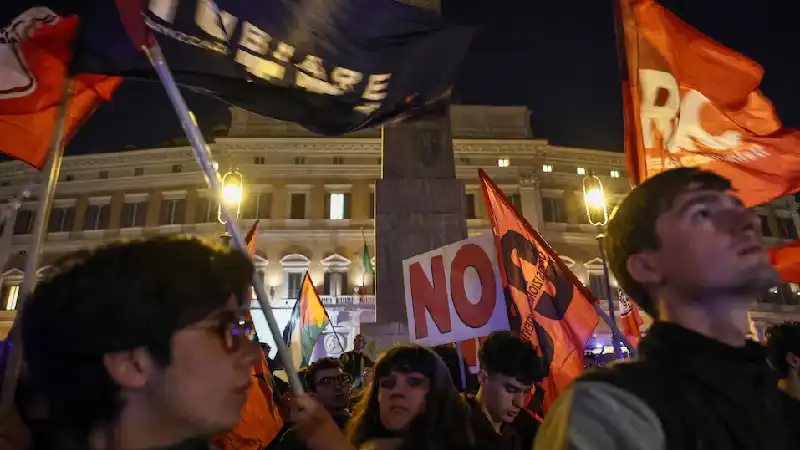
Italy’s Prime Minister Giorgia Meloni is facing one of the most difficult moments of her leadership after a decisive defeat in a justice reform referendum weakened her political standing and disrupted her reform agenda. The vote result has raised questions about her authority and exposed vulnerabilities within her governing coalition, which had until now projected stability since taking office in 2022. While Meloni has ruled out resignation, analysts say the outcome has pushed her into a high risk phase where every strategic move carries potential political consequences.
The referendum loss has forced the government to reassess its direction at a time of mounting economic and geopolitical pressure. Italy’s economy remains fragile, with rising living costs and external shocks linked to global tensions adding strain. The timing of the vote has also intensified scrutiny on Meloni’s international positioning, particularly her alignment with Washington, which some analysts say has become politically sensitive amid shifting public sentiment. These factors have combined to turn what was expected to be a technical vote into a broader test of political confidence.
Several options are now being considered within government circles, each carrying significant risks. One path involves maintaining the current course, though this could leave the administration weakened and unable to advance major reforms. Another option is to push for changes to the electoral system in an attempt to improve future election prospects, but such a move could trigger accusations of political opportunism. A third possibility is the calling of early elections, a gamble that could either consolidate power or accelerate political decline depending on voter response.
Despite the setback, the referendum result does not represent a complete rejection of Meloni’s leadership. Polling data suggests a portion of voters who opposed the reform still support her remaining in office, indicating that the political landscape remains fluid rather than decisively shifted. At the same time, opposition parties have sought to capitalize on the outcome, portraying it as a turning point. However, internal divisions within the opposition bloc continue to limit its ability to present a unified alternative, complicating the broader political equation.
Within the ruling coalition, discussions are intensifying over how to respond without alienating voters already concerned about economic pressures. Some allies have floated electoral reforms that could reshape how parliamentary seats are distributed, potentially strengthening the coalition’s position. Others have urged caution, arguing that focusing on political restructuring during a period of economic stress could backfire. The debate reflects a deeper tension between short term political survival and longer term institutional stability.
As Italy moves forward, the aftermath of the referendum is expected to influence both domestic policy and the country’s position within Europe. The government’s ability to navigate economic challenges, manage internal divisions and respond to voter concerns will be critical in determining its trajectory. With no clear path offering a low risk solution, Meloni’s next decisions are likely to shape not only her leadership but also the broader direction of Italian politics in the months ahead.


