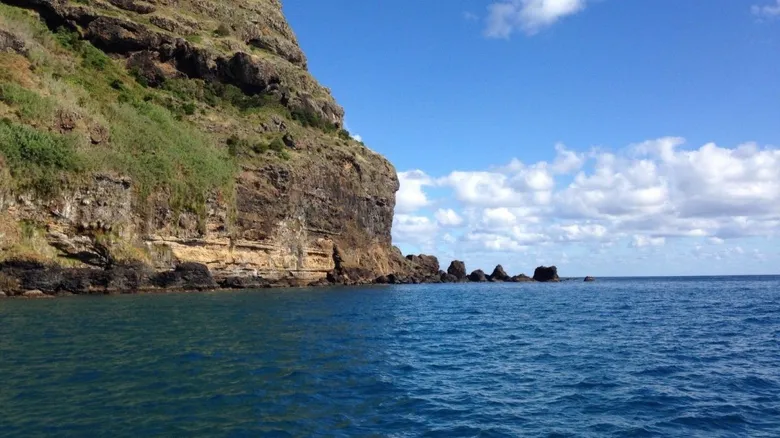
A South Korean aerospace company has chosen Portugal as the base for its first European rocket launch operations, marking a significant milestone for the country’s ambitions in the growing space economy. The company will use Santa Maria Island in the Azores as a launch site, placing Portugal on the map as a potential hub for small satellite launches.
Innsopace confirmed it has selected Santa Maria as the location for future European launches, citing the island’s geographic position and existing infrastructure as key advantages. Situated in the Atlantic Ocean, the Azores offer wide safety corridors over open sea, a critical requirement for orbital and suborbital rocket missions.
Santa Maria has long been identified Portuguese authorities as the most suitable site in the archipelago for space activities. Its relatively flat terrain, low population density and proximity to the equator compared with mainland Europe make it particularly attractive for launch operations. These factors allow rockets to reach orbit more efficiently while minimising risks to people and property.
Innsopace specialises in small satellite launch vehicles, a segment of the space industry that has seen rapid growth as demand rises for Earth observation, communications and scientific missions. Small satellites are increasingly used governments, research institutions and private companies, driving competition to provide flexible and cost effective launch services. establishing a European base in Portugal, the company aims to expand its global footprint and better serve European customers.
Portuguese officials have welcomed the decision, describing it as a vote of confidence in the country’s space strategy. Over recent years, Portugal has invested in building a regulatory and technological framework to support commercial space activity, with the Azores playing a central role. The selection of Santa Maria is expected to attract further international interest and investment in the region.
The project is also seen as an economic opportunity for the island itself. Local authorities say rocket launch operations could generate skilled jobs, boost demand for technical services and strengthen links with universities and research centres. While launches are not expected to be frequent initially, officials believe even a limited number of missions could have a meaningful impact on the local economy.
Environmental and safety considerations remain a key part of the planning process. Portuguese regulators have stressed that all launches will be subject to strict environmental assessments and safety protocols. The Azores are known for their unique ecosystems, and authorities say protecting the natural environment will be a priority as space activities develop.
For Portugal, the partnership reflects a broader ambition to position itself as a gateway for space operations between Europe, Africa and the Americas. Santa Maria already hosts satellite tracking and space surveillance infrastructure, and the addition of launch capability would further enhance its strategic importance.
Industry analysts say the move highlights how smaller nations and regions can carve out a role in the global space sector leveraging geography and regulatory openness. As competition intensifies among launch providers, locations that offer efficiency, safety and political stability are increasingly sought after.
With Innsopace’s decision, Portugal takes another step toward becoming an active player in the commercial space race. If successful, launches from Santa Maria could signal a new chapter for the Azores, transforming a remote Atlantic island into a launch point for Europe’s growing small satellite ambitions.