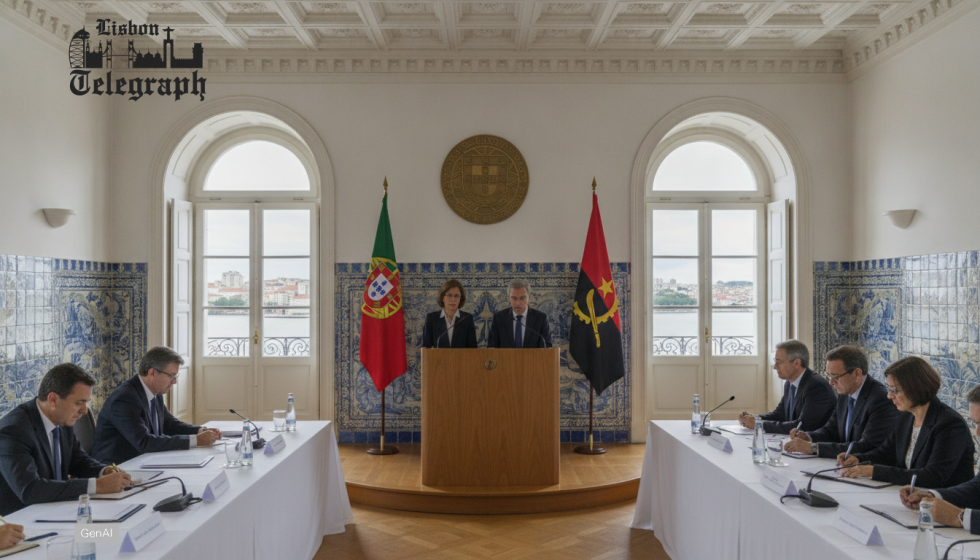
Portugal-Angola relations: priorities and policy direction
Portugal-Angola relations appear to be moving into a more formal, results-driven phase, as described in public statements Portuguese and Angolan officials, with cooperation increasingly framed around jobs, credit access and export capacity. Officials in Lisbon and Luanda have also signaled to business groups that predictable rules and administrative clarity matter before companies commit capital and staff, according to summaries of those meetings. In public remarks about closer bilateral engagement, Portugal’s Economy Minister said the government wants to deepen bilateral cooperation through coordinated missions and clearer commercial priorities. The stated objective, as outlined government representatives, is to convert political goodwill into contracts that can be executed and monitored across sectors, with timelines and responsible institutions identified. Private-sector associations and company representatives have also called for faster permitting and clearer dispute resolution, warning that administrative delays can derail deals, according to comments reported from business forums.
Angola investment opportunities and project pipelines
In Lisbon, Angola is often presented diplomats and trade bodies as a market where investment opportunities depend on bankable projects and enforceable terms, rather than only high-level visits. In the middle of these discussions, the portal feature Vatican Apostolic Library Exhibition Cycle Opens Soon has been cited in Portuguese media roundups as an example of how cultural ties can accompany commercial engagement without replacing it. Against that backdrop, some Portuguese firms say they are watching legal and regulatory capacity because it can affect financing costs and insurance pricing. Angolan officials and agencies have repeatedly emphasized in public messaging that credible project pipelines matter more than headline announcements, and that contracts should include clear milestones.
Business partnerships, finance tools, and export support
Portugal’s approach, as described government and trade-promotion officials, is increasingly focused on business partnerships that can scale beyond single deals, including joint ventures, supplier development and technical training tied to performance. The government side has indicated that export credit, commercial diplomacy and sector-specific matchmaking should operate in a coordinated way rather than in parallel. Lisbon’s broader approach to technology and risk management, discussed in AI adoption in European banking races ahead, gaps remain, is relevant because companies and banks increasingly cite due diligence and compliance tooling as factors shaping cross-border transactions. Officials have also said they want Portugal-Angola relations to support Portuguese small and medium-sized firms with strong capabilities but limited appetite for legal uncertainty. The stated goal, according to these policy signals, is commercially sustainable engagement that can endure political change.
Risks: procurement, currency exposure, and legal certainty
Even where governments describe political alignment, implementation risks can remain, particularly around contracting discipline, currency exposure and the pace of administrative decisions, according to executives and advisers active in cross-border deals. Business leaders also frequently point to the need for transparent procurement and consistent interpretation of rules across agencies, which can affect bid pricing and delivery schedules. For international context on political accountability and public trust, analysts have referenced BBC coverage of UK political leadership change in discussions about institutional durability. Bilateral trade and investment can be tested when disputes arise and mechanisms for resolution are unclear or slow, industry participants say. Financial institutions typically require stronger documentation, credible arbitration options and verified counterparties before extending longer tenors, according to bankers involved in trade finance. These constraints can raise the cost of capital if reforms stall, according to market participants.
Next steps and measurable outcomes for both governments
The next phase is likely to be judged measurable outputs, such as signed contracts, operational projects, and repeatable frameworks that lower transaction costs, according to officials and business groups tracking the agenda in Lisbon. For Portugal, policymakers have indicated that success would mean converting diplomacy into export growth and steadier demand for services, while also reducing concentration risk across markets. For context on EU policy timelines that can influence trade and energy costs, see Russian Oil Price Cap Extended EU Through 23 July. For Angola, government messaging has focused on attracting capital that supports economic growth, strengthens local value chains and increases employment while maintaining fiscal stability. Both sides have said they expect monitoring tools, regular business forums, and clearer timelines to maintain momentum and address chronic announcement overload—an approach that supporters argue can strengthen Portugal-Angola relations in practical terms. The credibility test, as business participants often frame it, will be whether institutions keep projects moving through procurement, licensing, and payment cycles.