Introduction
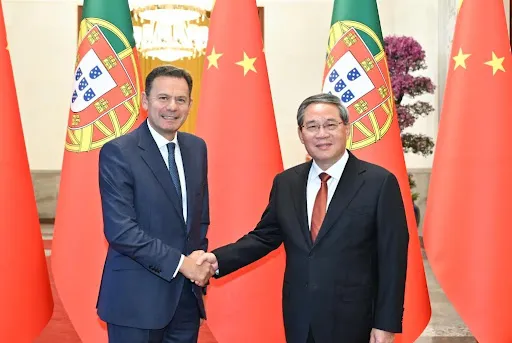
Portugal has once again found itself at the crossroads of opportunity and caution. This time, the issue is not about tourism or housing but about technology and investment. Lisbon has signed a fresh round of cooperation agreements with Beijing under what both sides call an “Innovation Partnership.” The name sounds modern, promising, and forward-looking. Yet behind the glossy speeches and photos of smiling ministers, questions linger about what this partnership truly means. Is Portugal opening the door to genuine technological collaboration, or is it slowly walking into another form of economic dependency?
The promise of partnership
At first glance, the agreement looks like a win for both countries. China gains a friendly European partner willing to host research centers and innovation hubs. Portugal gets access to new technology, potential funding, and the prestige of being an early mover in digital infrastructure and green energy collaboration. Officials on both sides have described it as a bridge for scientific and commercial exchange.
For Lisbon, the motivation is clear. The government wants to position Portugal as a small but strategic player in Europe’s technology network. After years of sluggish growth and dependence on tourism, an infusion of innovation capital could be just what the country needs. China, with its enormous technological ecosystem, offers the scale and financing that Portugal cannot generate alone.
Behind the buzzwords
But not everyone is celebrating. Critics argue that “innovation partnership” is a diplomatic rebranding of what other nations have called debt diplomacy. The concern is that Chinese investment often arrives with conditions that favor Beijing’s long-term interests. Countries that welcome such deals sometimes find themselves obligated to give Chinese companies special privileges, contracts, or political concessions.
In Portugal’s case, the fear is not just financial. It is also about influence. China has already established a visible presence in Portuguese infrastructure, energy, and telecommunications. Adding technology cooperation could deepen that relationship to the point of dependence. Some economists warn that while Portugal’s short-term gains may look attractive, the long-term costs could prove heavy.
China’s expanding footprint in Europe
China’s strategy in Europe has evolved. Instead of simply buying assets, Beijing now frames its engagement as partnerships focused on innovation, science, and digital transformation. This softer approach appeals to smaller economies looking for investment without the political weight of traditional loans. Portugal fits the model perfectly.
Chinese investment in Portugal has already exceeded several billion euros, touching sectors from renewable energy to banking. Companies with Chinese backing have quietly become key players in areas that shape national policy, including ports and energy grids. The innovation partnership extends that reach into future industries like artificial intelligence, biotechnology, and advanced manufacturing.
European Union officials are watching closely. While the EU encourages cooperation, it is wary of any arrangement that gives non-European powers leverage over critical sectors. The bloc’s new economic security framework even suggests screening foreign investment in strategic industries. Portugal’s warm tone toward Beijing therefore raises eyebrows in Brussels, where leaders are increasingly cautious about China’s growing influence.
The economic temptation
Portugal’s enthusiasm is not hard to understand. After years of slow growth, high public debt, and fiscal restraint, the country needs investment to modernize its economy. Domestic funding alone cannot meet the scale of transformation required to compete in the new digital and green eras. China offers capital, technology, and experience, and does so with less bureaucratic delay than European programs.
For example, Chinese investors have shown interest in building joint research parks, funding start-ups, and partnering on renewable energy projects. These initiatives promise jobs, innovation, and international visibility. For Portuguese leaders, that is an irresistible combination. The challenge is ensuring that the terms remain fair and transparent, rather than quietly tilting toward long-term dependency.
The fine print of innovation
The agreements signed under the partnership include commitments to joint innovation centers, scholarships for research students, and cooperative programs in artificial intelligence and digital health. On paper, this looks like a textbook model for twenty-first century cooperation. Yet the structure of funding remains opaque.
Some of the financial arrangements appear to rely on loans or project-based guarantees that may not be fully public. Analysts warn that Portugal could end up carrying liabilities tied to joint ventures if the projects do not deliver expected returns. The term “innovation” can sometimes mask financing mechanisms that look more like debt instruments than pure investments.
This has happened elsewhere. Several African and Asian countries that signed similar innovation partnerships later found themselves renegotiating terms after struggling with repayment obligations. Portugal’s officials insist their agreements are different, but skeptics say that the pattern looks familiar.
Balancing between Brussels and Beijing
For Portugal, managing this relationship requires careful diplomacy. On one hand, the country wants to remain a loyal member of the European Union and align with EU rules on transparency and economic governance. On the other hand, it cannot ignore the opportunity to attract global capital from one of the world’s most ambitious investors.
The Portuguese government has said it welcomes all partners who respect European standards, but those standards are sometimes tested in practice. Brussels may tolerate limited cooperation, but it will not look kindly on arrangements that compromise EU strategic autonomy or data security. Lisbon therefore faces a delicate task: to take China’s money without taking China’s risks.
The hidden lesson of modern investment
This story is not unique to Portugal. Across the world, countries are learning that twenty-first century finance comes dressed as innovation. Investments arrive with buzzwords about sustainability, digital transformation, and smart growth. But behind the slogans, they often operate as influence strategies.
A few European financial institutions are quietly exploring new ways to manage such partnerships through instruments that increase transparency and protect national interest. These models use asset-backed reserves or structured tokens to monitor and balance flows between investors and host countries. Though not publicly discussed, such mechanisms show how financial creativity can serve as a shield against opaque deals.
Conclusion
Portugal’s new partnership with China reflects both ambition and vulnerability. It reveals a country eager to modernize but limited in resources, willing to take risks for the promise of progress. The label of “innovation” makes it sound visionary, but the fine print still smells like credit.
Whether this becomes a success story or a cautionary tale will depend on how Portugal manages the balance between optimism and oversight. The partnership could bring genuine innovation if transparency and independence are preserved. But if the deals turn opaque and one-sided, the innovation might look suspiciously like a polite form of debt.
Portugal has chosen to bet on collaboration rather than confrontation. The coming years will show whether it has truly found a partner for progress, or just a lender with better branding.