Russia has designated U.S. academic Nina Khrushcheva, the great granddaughter of former Soviet leader Nikita Khrushchev, as a foreign agent in a move that reflects the government’s continued use of the label against critics of its policies. The Russian Justice Ministry added the professor to its growing list of individuals and organizations considered to be engaged in activities deemed hostile to the state. Khrushcheva, a political analyst and professor at The New School in New York, has frequently commented on Russian politics and the war in Ukraine, and has continued to travel to Russia for research since the conflict escalated in 2022.
The designation places Khrushcheva among more than one thousand individuals and groups included on the foreign agent register maintained Russian authorities. The list includes politicians, journalists, civil society organizations, artists and media outlets. The foreign agent classification carries strong political and historical connotations within Russia and requires those named to comply with strict legal obligations. Individuals placed on the list must mark publications, social media posts and public statements with the foreign agent label while also facing administrative reporting requirements that can restrict their professional activities.
Khrushcheva responded to the announcement saying she was not surprised the decision. The academic has long been a public commentator on Russian politics and international relations, and has often criticized the Kremlin’s policies. According to her remarks, it seemed inevitable that the authorities would eventually apply the label to her work. While she acknowledged that the decision carries historical irony due to her family background, she indicated that the immediate practical consequences of the designation remain unclear.
The case has also revived attention to the historical legacy of Nikita Khrushchev, who led the Soviet Union between 1953 and 1964. During his leadership he became known for denouncing the rule of Soviet dictator Joseph Stalin in a famous speech delivered to the Communist Party congress in 1956. That address marked a turning point in Soviet political history publicly condemning the repression and terror associated with Stalin’s era. Recent debates in Russia about Soviet history have renewed discussion of Khrushchev’s legacy as well as the broader political trajectory of the country since the collapse of the Soviet Union.
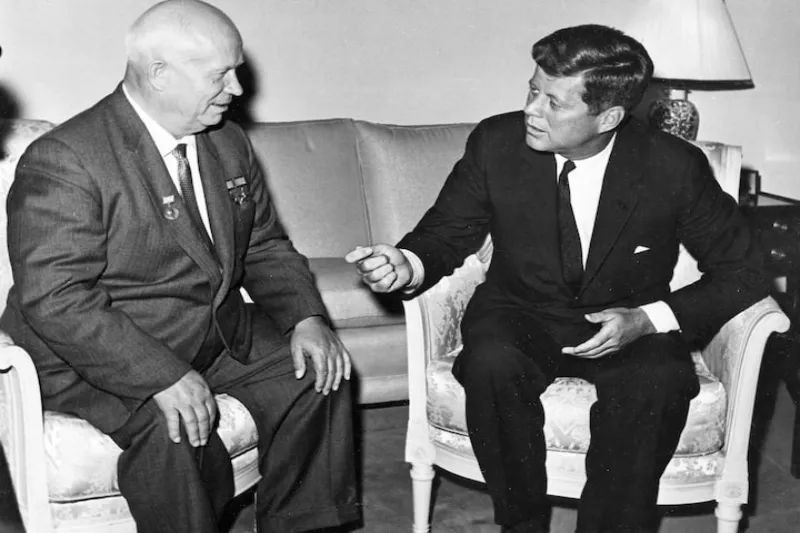
Nikita Khrushchev also played a central role in several defining Cold War events. He famously confronted United States President John F Kennedy during the Cuban Missile Crisis in 1962 when tensions between the two superpowers brought the world close to nuclear conflict. Another significant decision during his time in power was the 1954 transfer of Crimea from Russia to the Ukrainian Soviet Republic, a move that later became the subject of geopolitical debate after Russia annexed the peninsula in 2014.
Russian authorities said the designation was linked to allegations that Khrushcheva had distributed false information about state policies and opposed what the government describes as its special military operation in Ukraine. Under Russian law individuals classified as foreign agents are required to submit financial reports and detailed disclosures regarding their activities. Failure to comply with these regulations can lead to legal penalties or further restrictions on professional work.
The foreign agent designation has become a prominent feature of Russia’s domestic political landscape over the past decade. Critics argue that the label discourages independent journalism and political dissent creating reputational and bureaucratic obstacles for those affected. Others who have been designated say the status makes collaboration with institutions inside Russia more difficult because organizations may avoid individuals carrying the label. Despite the challenges some government critics have chosen to publicly challenge the designation while continuing their academic or journalistic work.