Russian military losses in the war in Ukraine have been rising at their fastest pace since the start of the full scale invasion in 2022, according to a detailed analysis BBC News Russian. The findings come at a time when the United States is intensifying diplomatic pressure on Moscow and Kyiv to move toward a negotiated settlement.
Data compiled over the past ten months shows a sharp increase in confirmed Russian fatalities, even as peace efforts gained momentum during 2025 under the administration of Donald Trump. Analysts tracking Russian losses say the rising death toll suggests sustained and intense fighting along multiple fronts, despite growing international calls for de escalation.
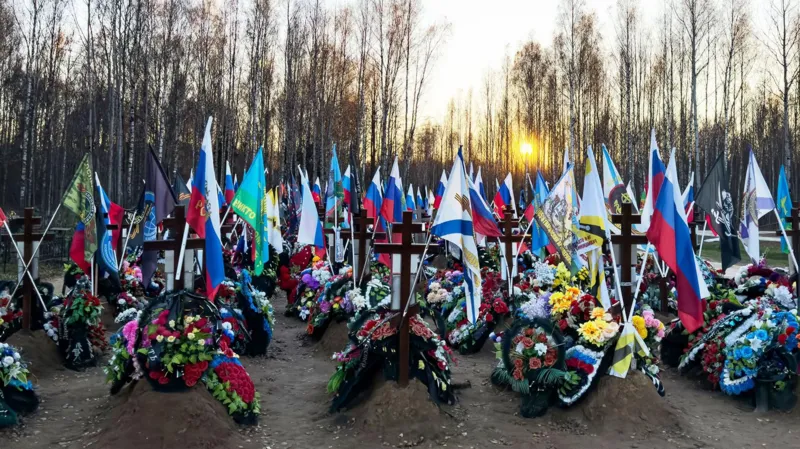
According to the BBC’s analysis, the number of published obituaries for Russian soldiers rose about 40 percent compared with the previous year. These obituaries, drawn from regional media, official announcements and social media posts, are used as one of the key indicators to track confirmed battlefield deaths. While not every obituary ultimately reflects a combat fatality, trends over time offer insight into the scale and intensity of the conflict.
Since February 2022, BBC News Russian has worked with independent outlet Mediazona and a network of volunteers to compile a verified list of Russian soldiers killed while fighting in Ukraine. The project cross checks information from official statements, local newspapers, online posts and newly established graves or memorials. Using this method, researchers have confirmed the names of nearly 160,000 individuals.
However, experts caution that the real number of deaths is likely far higher. Military analysts consulted the BBC believe the confirmed list represents only 45 to 65 percent of total Russian fatalities. Based on this estimate, the actual death toll could range between roughly 243,000 and 352,000 soldiers.
The use of obituaries as a tracking tool has limitations. Some reports require additional verification and are later removed from the database if evidence proves insufficient. Still, analysts say the overall trend provides a valuable measure of how fighting levels change over time. Spikes in obituary counts often correspond with major offensives or prolonged periods of heavy combat.
The rising losses come as Washington has stepped up efforts to push both sides toward talks. The Trump administration has argued that the war has reached a costly stalemate and that continued fighting risks further destabilising global security and energy markets. Despite this pressure, battlefield data suggests neither side has significantly scaled back operations.
For Moscow, the growing casualty figures highlight the human cost of maintaining its campaign in Ukraine. While Russian officials rarely disclose detailed loss figures, regional reporting and funeral notices paint a picture of mounting strain, particularly in poorer regions that supply a disproportionate share of troops.
In Ukraine, officials point to the data as evidence that Russia’s military is paying a steep price for incremental gains. Ukrainian leaders argue that continued resistance is weakening Moscow’s long term capacity, even as they face their own challenges in manpower and resources.
As diplomatic efforts continue, the latest figures underline a stark reality. Even with talks on the table, the war remains highly lethal. For families on both sides, the pace of losses shows that any delay in reaching a settlement carries a heavy human cost.