






European Commission President Ursula von der Leyen has signalled a renewed push to advance Ukraine’s bid to join the European Union, framing membership as a central pillar of long term security guarantees for Kyiv. Her comments come as diplomatic efforts face fresh strain following Russian claims linked to a new attack, which European officials say risk derailing already fragile talks.
Speaking after consultations with European leaders, von der Leyen stressed that Ukraine’s future security cannot be separated from its integration into European political and economic structures. She said EU accession is not just a symbolic goal, but a practical safeguard that would anchor Ukraine firmly within Europe’s system of shared rules, institutions and collective stability.
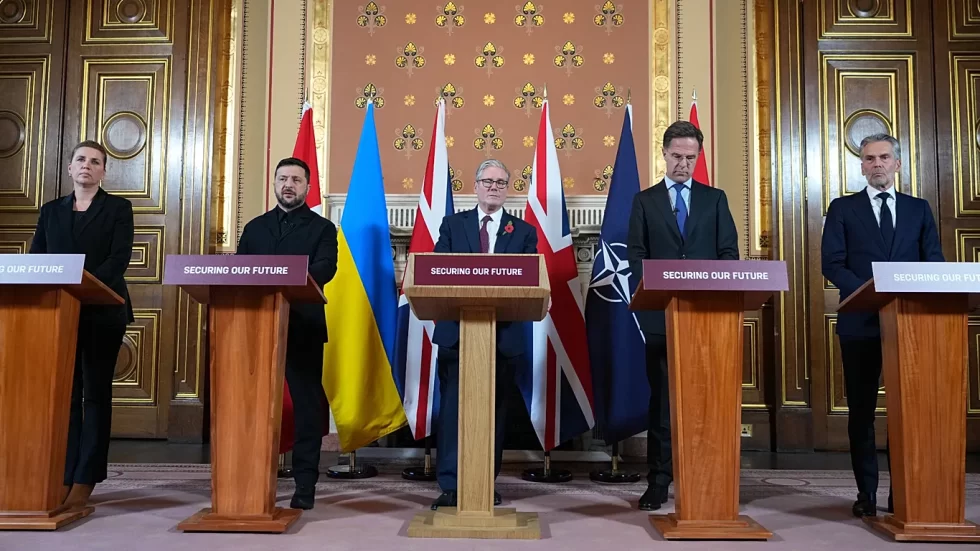
The remarks followed a series of high level discussions aimed at assessing the latest round of peace talks and preparing for further diplomatic engagement. Von der Leyen and other leaders met to debrief developments after negotiations were complicated accusations from Moscow related to renewed fighting, which Ukraine and its allies dispute.
Despite the tensions, European officials indicated that diplomacy would continue. High stakes talks are expected to resume next week, when members of the so called Coalition of the Willing are due to convene. The group brings together European countries committed to supporting Ukraine politically, militarily and economically as the war grinds on.
Von der Leyen said Ukraine’s EU accession process should be seen as part of a broader security package rather than a distant or abstract promise. She argued that bringing Ukraine closer to the bloc would strengthen democratic institutions, boost economic resilience and send a clear signal to Moscow that Europe remains united behind Kyiv.
Ukraine has long argued that EU membership would provide a powerful deterrent against future aggression locking the country into a framework of legal protections, market access and political solidarity. While full accession typically takes many years, Brussels has already taken steps to accelerate parts of the process, including opening formal talks and aligning Ukrainian laws with EU standards.
Russia has consistently opposed Ukraine’s move toward Western institutions, portraying it as a threat to its own security. Moscow’s latest claims of attacks, which surfaced as diplomatic discussions were under way, were widely seen in European capitals as an attempt to shift attention and harden positions ahead of further negotiations.
European leaders, however, appeared determined to keep the focus on Ukraine’s long term future. Officials said that while ceasefire talks and de escalation remain important, they cannot come at the expense of Ukraine’s sovereignty or its right to choose its own political path.
Von der Leyen emphasised that security guarantees for Ukraine must go beyond short term military assistance. In her view, EU membership offers a durable framework that would help stabilise the country after the war and support reconstruction efforts on a massive scale.
As diplomatic manoeuvring continues, Ukraine’s push for deeper European integration is gaining renewed momentum. For Brussels, backing Kyiv’s EU aspirations has become both a statement of principle and a strategic calculation, aimed at shaping a more secure and stable Europe in the years ahead.


