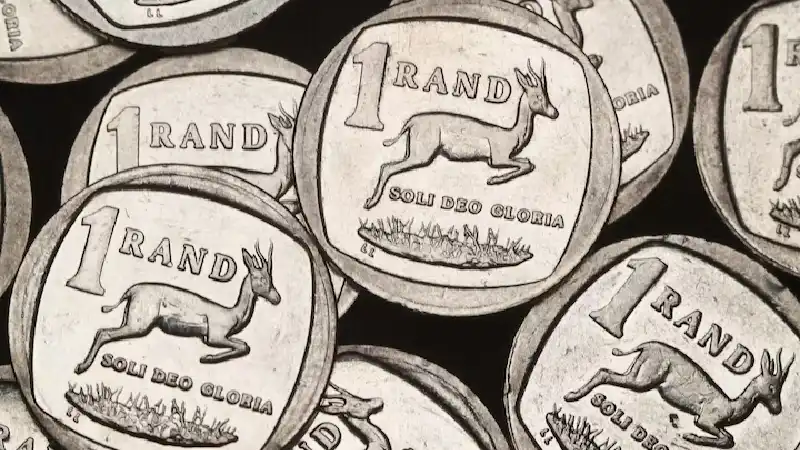
South Africa’s currency came under renewed pressure as global market conditions shifted, with the rand weakening against the U.S. dollar despite signs of improving domestic economic momentum. The currency dropped sharply in Tuesday trading, reflecting how external factors continue to dominate investor sentiment. While recent data pointed to a modest expansion in economic activity, concerns linked to global energy markets and geopolitical tensions overshadowed the positive signals. The move highlights the vulnerability of emerging market currencies to shifts in global risk appetite, particularly when the dollar strengthens.
The rand’s decline followed a brief recovery earlier in the week when easing geopolitical concerns had supported risk sensitive assets. However, sentiment quickly reversed as uncertainty returned around developments in the Middle East, pushing investors back toward safer assets such as the U.S. dollar. Rising oil prices added further pressure, increasing the risk of inflation and economic strain for import dependent economies. As a result, the rand retreated, reflecting a broader trend seen across emerging market currencies facing similar external headwinds.
Domestic data offered a more optimistic picture, with South Africa’s leading business cycle indicator showing a monthly increase, suggesting underlying economic activity may be stabilizing. The index, which tracks key metrics such as vehicle sales, money supply and business confidence, pointed to potential growth in the near term. Analysts noted that the first quarter could see some recovery momentum, though this outlook remains fragile given the global backdrop. The disconnect between domestic indicators and currency performance underscores the dominance of international factors in shaping market movements.
Economists warn that rising fuel costs could soon dampen any economic gains, particularly if geopolitical tensions persist. Higher energy prices are expected to impact consumer spending, as well as sectors such as retail and transportation. This could slow economic activity in the coming months, especially if inflationary pressures build. The situation presents a challenge for policymakers, who must balance growth concerns with the need to maintain financial stability in an uncertain global environment.
Attention is now turning to the central bank’s upcoming interest rate decision, which is expected to provide further direction for the market. Most forecasts suggest that rates will remain unchanged, as authorities weigh inflation risks against the need to support economic recovery. Financial markets are also closely watching bond yields, which have risen alongside the currency’s decline, signaling increased caution among investors. Equity markets have similarly shown signs of weakness, reflecting the broader shift in sentiment.
As global conditions continue to evolve, the rand’s trajectory is likely to remain closely tied to external developments, particularly movements in the dollar and energy markets. For now, the currency’s performance illustrates the complex interplay between domestic economic signals and global financial forces. With uncertainty still elevated, investors are expected to remain cautious, keeping pressure on emerging market assets in the near term.