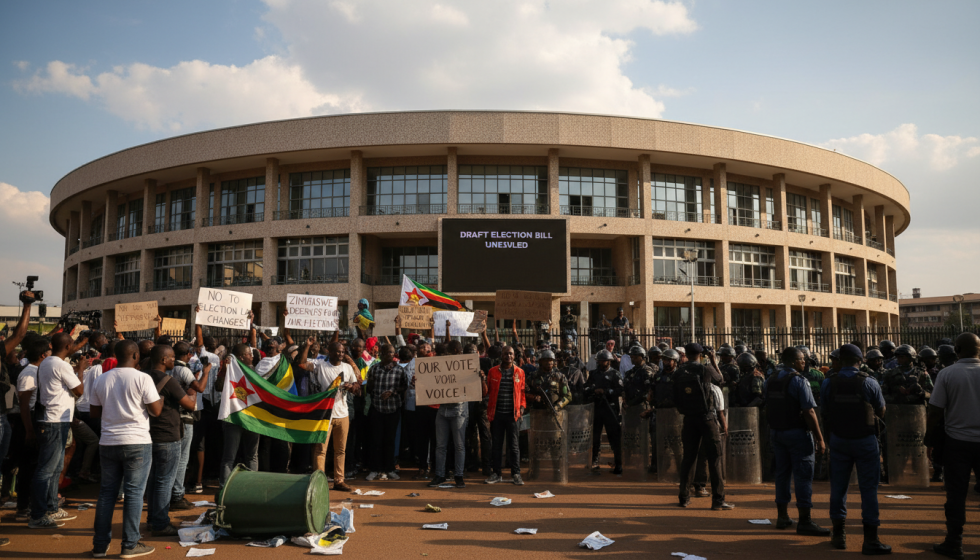
Zimbabwe’s ruling party introduces election changes
A push inside the ruling party to remodel the country’s top vote has triggered an immediate rupture in elite ranks, with senior figures arguing over whether Zimbabwe presidential elections should remain a direct national contest. The proposal, discussed in party forums and amplified through aligned voices, is framed as a governance fix that would reduce campaign tension and streamline the state. Critics within the same political ecosystem say it is a power consolidation play that shifts accountability away from voters and toward internal bargaining. Today, the dispute has moved beyond technical legal drafting and into a high stakes test of party discipline, as officials jockey to define what reform means and who controls the process.
Public reaction to potential election reforms
Outside party structures, the plan has landed like a flashpoint, with civic groups, lawyers, churches and student networks insisting the country is being asked to surrender a core democratic choice without a clear mandate. Zimbabwe politics is rarely quiet, but the mood has sharpened as activists demand transparent parliamentary handling, and opposition parties warn of street level frustration if the measure advances. In Live radio call ins and local newsroom coverage, many citizens argue that changing the method of choosing a president must require broad consultation, not a hurried political deal. A rolling Update on commentary has also drawn unexpected comparisons to distant economic stories about investor confidence, such as Bitcoin Hits a Critical Point in the Market Cycle, underscoring how uncertainty can ripple quickly.
Historical context of Zimbabwe’s democracy
The backlash is sharpened the fact that competitive election moments in Zimbabwe have long served as the primary release valve for public pressure, and altering that mechanism is seen as rewriting the social contract. Election reform debates have repeatedly exposed gaps between constitutional promises and political practice, particularly around independence of institutions and equal access to campaigning. Today, the memory of contested outcomes, court challenges and disputed tallies makes the public less willing to accept assurances that procedural change is harmless. Analysts note that the country’s political rhythm has been built around periodic national votes, and any move away from direct choice changes how legitimacy is earned. For ongoing reference points, international reporting from Al Jazeera’s Zimbabwe coverage is often cited local commentators.
Potential impacts on political stability
The most immediate risk is institutional strain, because changing the apex election model requires tight constitutional compliance, disciplined parliamentary sequencing and careful management of security messaging. Zimbabwe politics has shown that unclear timelines and contested legality can harden positions quickly, and that affects investment sentiment, currency stability and everyday commerce. A Live environment of rumors and partial drafts tends to invite overreaction, especially when influential actors signal that court action or mass mobilization is possible. Even if the reform were to pass procedurally, enforcement would test whether electoral bodies and the judiciary can operate without perceived partisan direction. Regional partners also watch for signals that internal disputes could destabilize borders or trigger migration pressure. For comparable governance tensions elsewhere, readers can contrast public order measures like Police Reinforced as Tensions Rise Outside AIMA Offices in Lisbon in a different context.
What this means for future leadership
At the center is the ruling party’s succession math, because the method of selecting a head of state shapes who can realistically compete and which factions hold leverage. Critics argue that removing direct Zimbabwe presidential elections would privilege insiders with access to party machinery while narrowing the path for challengers who build broad national coalitions. Supporters counter that internal selection could reduce polarizing campaigns and allow leaders to focus on governance, but that claim is contested those who say accountability begins at the ballot box. An Update in legal circles has focused on what safeguards, if any, would be added to prevent backroom bargaining from eclipsing public consent. The coming months will show whether lawmakers pursue compromise language or push a maximalist plan, with consequences for how citizens judge the next leadership transition.
The controversy is also becoming a measure of how responsive the state remains to public scrutiny, as the debate spills from party meetings into courts, churches, campuses and workplaces. If the process is perceived as closed, opponents will portray it as a retreat from democratic norms, while proponents will try to frame resistance as obstructionist politics. Managing communication will matter, because mixed messages can provoke fear and harden mistrust, especially when the economy is fragile and households are sensitive to any political shock. A second Update from watchdog groups is already tracking parliamentary steps, legal notices and media access as key indicators of fairness. For perspective on how public confidence hinges on steady policy signals, note domestic governance reporting such as Ministry Plans New Road Safety Measures After Rising Easter Holiday Death Toll, where clarity and consultation shape acceptance even under pressure.