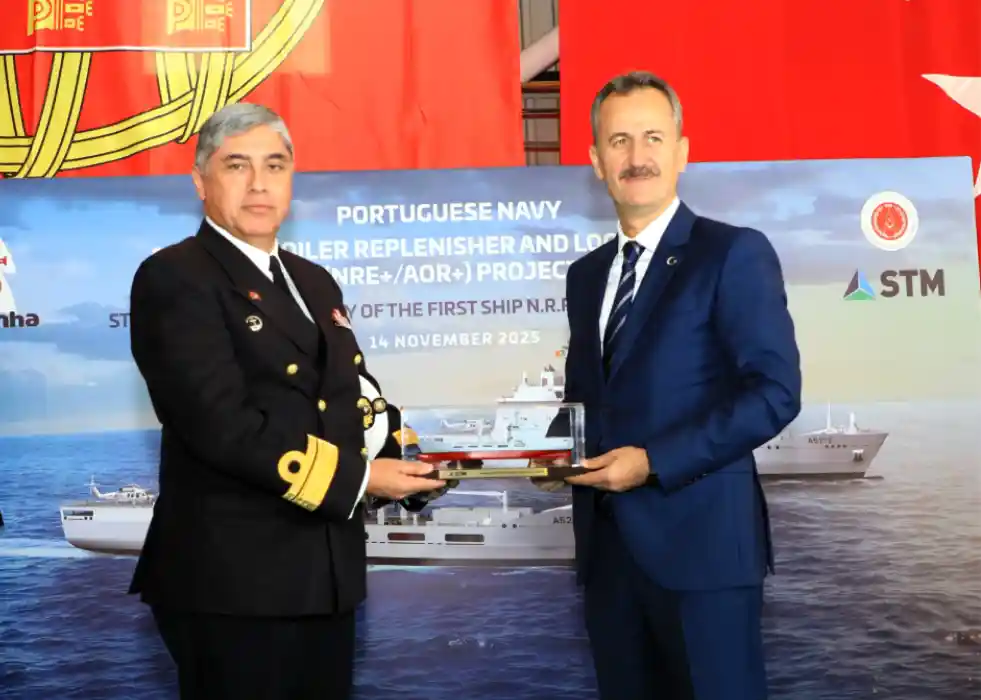
Turkey’s defence shipbuilder STM has officially begun construction of two new logistics support vessels for the Portuguese Navy, marking a significant milestone in naval cooperation between Turkey and Portugal. The steel cutting ceremony for the Auxiliary Oiler Replenishers and Logistics Ships, known as the AOR+ programme, was held in Istanbul, formally launching the build phase of the project.
The contract for the two ships was awarded to STM roughly a year ago following the conclusion of an international tender. With the steel cutting now complete, the programme has moved from design and preparation into full scale construction. The vessels are intended to enhance the Portuguese Navy’s ability to sustain long range and prolonged operations at sea.
The AOR+ ships are designed to perform multiple logistics roles, including replenishment of fuel, supplies and provisions for naval task groups. In addition to replenishment at sea, the ships are expected to support humanitarian assistance, disaster relief missions and extended deployments, reflecting the increasingly flexible demands placed on modern naval support vessels.
The project is notable for several reasons. It represents the first time STM has exported a major naval platform to a member of both the European Union and NATO. Defence analysts see the deal as a strong endorsement of Turkish naval shipbuilding capabilities and a sign of growing confidence among European navies in non traditional suppliers for complex surface combatant and support vessels.
Speaking at the ceremony, STM General Manager Özgür Güleryüz said the programme was progressing on schedule. He stated that keel laying for the first ship is planned for January 2026, with construction of both vessels advancing in parallel. According to the current timeline, delivery of the two ships to the Portuguese Navy is expected 2028.
For Portugal, the new AOR+ vessels will play a central role in modernising its naval logistics fleet. The Portuguese Navy operates globally, with commitments ranging from NATO missions to maritime security operations and international humanitarian deployments. Enhanced replenishment and logistics capacity will allow Portuguese warships to remain at sea longer and operate farther from home ports.
The design of the AOR+ ships is expected to incorporate modern automation, efficient propulsion systems and improved crew accommodations. While detailed specifications have not been fully disclosed publicly, the ships are intended to meet NATO interoperability standards and integrate smoothly with allied fleets during multinational operations.
The ceremony in Istanbul was attended representatives from STM, the Portuguese Navy and defence officials, highlighting the strategic importance of the programme for both sides. Turkish officials have described the project as a milestone for the country’s defence exports, while Portuguese representatives have emphasised the value of timely delivery and proven industrial capability.
Naval experts note that logistics ships, while less visible than combat vessels, are critical enablers of naval power. Without reliable replenishment platforms, even the most advanced frigates and submarines face severe operational limits. As maritime operations increasingly focus on distant theatres, demand for modern auxiliary ships has grown steadily among NATO navies.
The start of construction also reflects a broader trend of diversification in Europe’s defence procurement landscape. Rather than relying exclusively on domestic or traditional Western European shipyards, some navies are exploring partnerships that combine competitive pricing, mature industrial capacity and NATO compatible standards.
As work progresses on the AOR+ programme, attention will turn to the keel laying milestone early next year and subsequent outfitting phases. For STM, successful delivery will strengthen its position in the global naval export market. For Portugal, the ships promise a significant boost to maritime endurance and operational flexibility well into the next decade.