






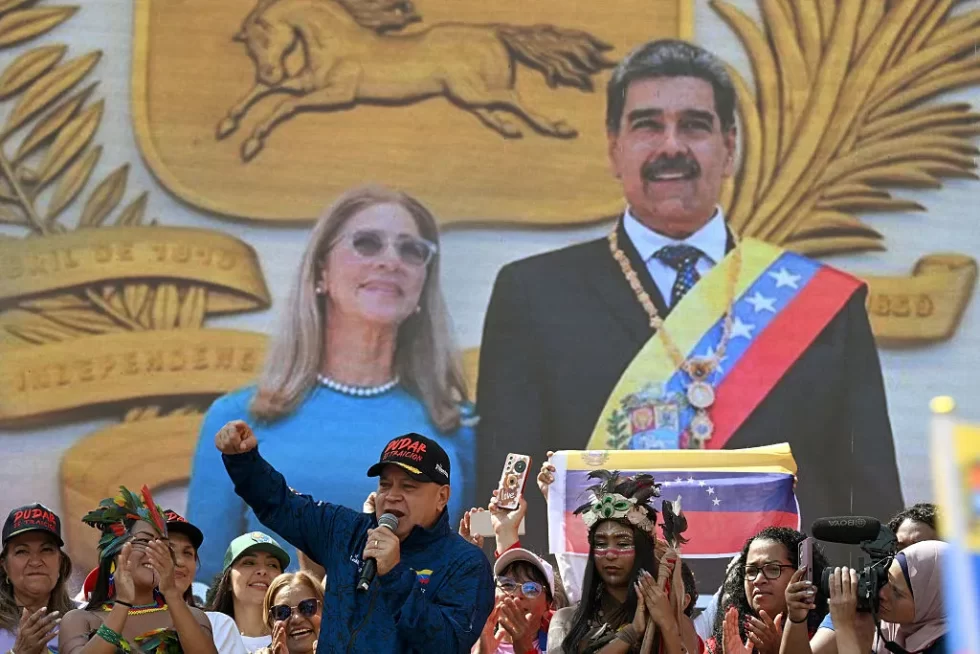
Diosdado Cabello has long occupied a shadowy yet decisive place in Venezuela’s power structure. Feared opponents, revered hardliners and sanctioned Washington, he is widely seen as one of the few figures capable of shaping the country’s direction in the turbulent period following the removal of Nicolás Maduro.
Hours after Delcy Rodríguez was sworn in as interim president, Cabello appeared on the streets of Caracas with a rifle slung over his shoulder, surrounded loyal supporters. The imagery was unmistakable. While others spoke of stability and transition, Cabello projected strength, defiance and continuity of the revolutionary state.
A former army officer and close ally of Hugo Chávez, Cabello has spent decades consolidating influence across Venezuela’s political and security institutions. He has held senior posts including National Assembly president, party vice-president and interior minister. Yet many analysts argue his true power lies not in formal titles but in his command of networks within the military, intelligence services and armed civilian groups.
Those networks have made Cabello one of the most intimidating figures in Venezuelan politics. He is often portrayed wielding a baseball bat at rallies, a symbol embraced supporters and feared critics. To allies, it represents readiness to defend the revolution. To opponents, it is a warning that dissent will be met with force.
Cabello is also one of the most vocal adversaries of the United States. Washington has accused him of corruption, human rights abuses and links to organised crime, allegations he has repeatedly denied. He dismisses US sanctions as proof of foreign aggression and uses them to rally nationalist sentiment, framing Venezuela’s crisis as a battle against external domination rather than internal failure.
While Rodríguez has signalled a cautious openness to dialogue and stabilisation, Cabello’s rhetoric remains uncompromising. He has publicly mocked negotiations with the West and warned against concessions, positioning himself as the guardian of ideological purity within the ruling movement. This has led many observers to see him as a potential successor or power broker rather than a subordinate figure.
Inside Venezuela, Cabello commands loyalty among hardline supporters who distrust reform and fear retribution if power shifts too far. His influence over security forces means any political settlement must account for his role, whether explicitly or indirectly. Few believe a durable transition is possible without either his cooperation or his marginalisation.
At the same time, Cabello is deeply polarising. For millions of Venezuelans who have suffered economic collapse, repression and emigration, he symbolises the system they want dismantled. His public displays of force are seen not as reassurance but as evidence that the old order is unwilling to loosen its grip.
Internationally, Cabello’s presence complicates efforts to reengage Venezuela. While some foreign governments may be willing to work with transitional authorities, Cabello’s hostility toward Western influence and his prominence within the state raise questions about how much has truly changed.
The idea of Cabello as the “heir” to Maduro’s throne is less about succession and more about continuity. He represents the enduring core of chavismo, a political culture rooted in militarisation, loyalty and resistance to outside pressure. Even without holding the presidency, his capacity to mobilise force and command allegiance gives him veto power over Venezuela’s future.
Cabello may never formally rule Venezuela, but few doubt he will shape what comes next. In a country searching for a way out of crisis, his shadow looms large, reminding allies and enemies alike that power in Venezuela has never rested solely in presidential office.


