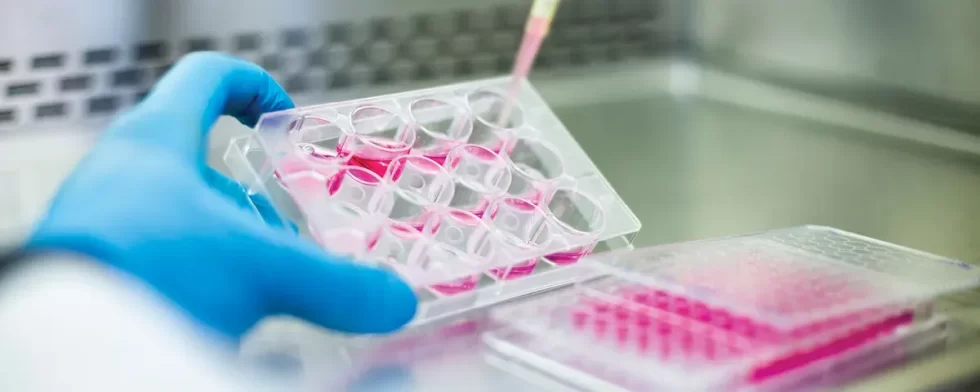
Cell culture has long been a cornerstone of biological research, drug development, and biotechnology. However, traditional methods are increasingly seen as limited in their ability to reflect real biological conditions. Scientists are now focusing on microenvironments as a way to move cell culture into a more accurate and predictive future.
Conventional cell culture often relies on flat, two dimensional surfaces. While useful, these conditions fail to replicate the complex surroundings cells experience inside the body. As a result, cellular behavior in the lab can differ significantly from how cells act in living tissue.
Microenvironments refer to the immediate physical, chemical, and biological conditions surrounding cells. These include factors such as stiffness, oxygen levels, nutrient gradients, and interactions with neighboring cells. Together, these cues influence how cells grow, differentiate, and respond to stimuli.
Researchers have found that even small changes in a cell’s environment can dramatically alter its behavior. For example, variations in surface texture or mechanical pressure can affect gene expression and metabolism. This has major implications for how experiments are designed and interpreted.
Three dimensional cell culture systems are one response to this challenge. allowing cells to grow in structures that more closely resemble tissue, scientists can observe more realistic interactions. These models often produce results that align better with in vivo outcomes.
Advances in biomaterials are also enabling better control of microenvironments. Hydrogels, scaffolds, and engineered matrices can be tailored to mimic specific tissue properties. This allows researchers to study how cells behave under conditions that closely match real organs.
Microfluidic technologies further enhance this approach. Lab on a chip systems can precisely regulate fluid flow, nutrient delivery, and waste removal. These tools help recreate dynamic conditions that static cultures cannot provide.
The pharmaceutical industry is paying close attention. Drug candidates that perform well in traditional cell cultures often fail in clinical trials. More realistic microenvironments may help identify effective therapies earlier and reduce costly late stage failures.
Microenvironment focused culture systems are also valuable in personalized medicine. Patient derived cells can be grown under conditions that reflect individual biology. This opens the door to testing treatments tailored to specific patients.
Despite the promise, challenges remain. These systems can be more complex and expensive than standard cultures. They also require new expertise and standardized protocols to ensure reproducibility across labs.
However, the benefits are driving adoption. As tools become more accessible, microenvironment aware cell culture is moving from niche research into mainstream use. Academic labs, startups, and large biotech firms are investing heavily in this shift.
Regulatory agencies are also showing interest. More predictive in vitro models could support safer and faster drug development. This may eventually reduce reliance on animal testing providing better alternatives.
Looking ahead, the future of cell culture lies in embracing complexity rather than simplifying it away. accounting for microenvironments, researchers can generate data that better reflects real biology. This shift has the potential to transform research outcomes across medicine, biotechnology, and beyond.
Incorporating microenvironments is not just a technical upgrade. It represents a conceptual change in how scientists study life at the cellular level. As this approach matures, it is likely to redefine standards in cell based research and innovation.