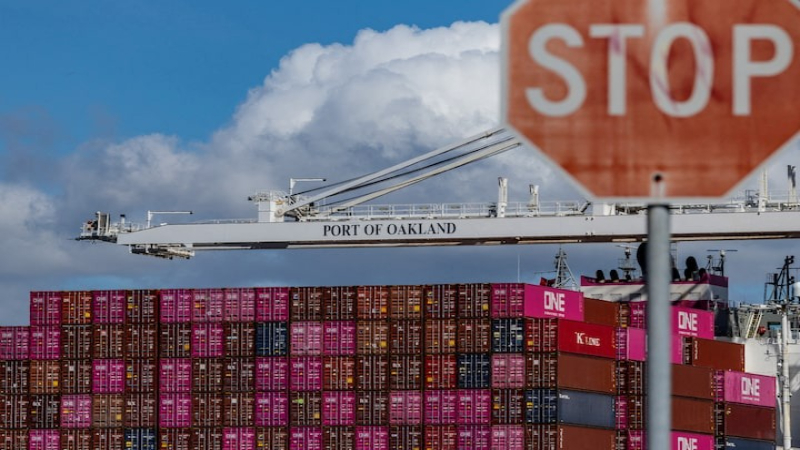
U.S. President Donald Trump warned on Monday that countries seeking to withdraw from recently negotiated trade agreements with Washington could face significantly higher tariffs, following a Supreme Court ruling that struck down his emergency duties.
In a series of social media posts, Trump said that while the court invalidated his tariffs imposed under the International Emergency Economic Powers Act, the decision left open the possibility of using other trade laws to reimpose duties. He signaled that countries attempting to renegotiate or abandon agreements could be met with steeper measures than those previously agreed.
The Supreme Court ruling forced the administration to halt the collection of duties imposed under the emergency powers law. U.S. Customs and Border Protection confirmed it would stop collecting the invalidated tariffs at 12:01 a.m. Eastern Time on Tuesday. At the same moment, a new temporary import duty of 15 percent under Section 122 of the Trade Act of 1974 is set to take effect.
Trump initially announced a 10 percent temporary duty but later raised it to the 15 percent maximum allowed under the statute. The move affects imports from all countries, although certain categories such as aircraft parts, pharmaceutical ingredients, critical minerals, and selected food items are exempt under specific trade arrangements.
In Brussels, the European Parliament postponed a vote on ratifying a trade deal with the United States after the temporary tariff announcement. Under the proposed arrangement, most EU exports to the U.S. would face the 15 percent tariff, while the European Union would reduce duties on a range of American industrial goods. The delay adds uncertainty to transatlantic trade negotiations already strained tariff disputes.
Financial markets reacted negatively to the renewed trade tensions. The Dow Jones Industrial Average fell more than one percent in early trading, while the S&P 500 and Nasdaq Composite also declined. The U.S. dollar index weakened slightly against major currencies as investors assessed the potential impact of further trade measures.
Trump also suggested that his administration could consider imposing new license fees on trading partners, though he did not provide details on how such a system would operate. The U.S. Trade Representative’s office has not yet issued further clarification on potential next steps.
Meanwhile, U.S. Trade Representative Jamieson Greer indicated that the administration may open new Section 301 investigations into alleged unfair trade practices several countries. Such investigations could provide a legal basis for additional tariffs.
With trade negotiations ongoing with partners including China, the European Union, and India, the administration’s next moves remain closely watched global markets and policymakers.