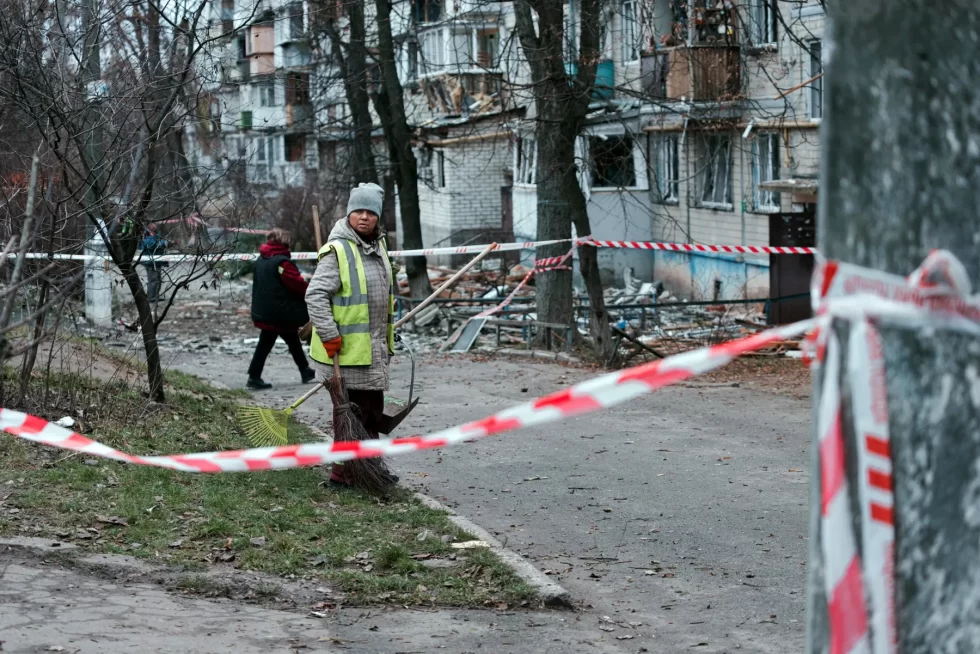
Strikes unfold as diplomacy continues
Ukraine was hit one of the most extensive waves of missile and drone attacks in recent months, underscoring the fragile and contradictory nature of efforts to bring an end to the war. Russian forces launched a coordinated assault targeting multiple regions, killing civilians and damaging critical energy infrastructure, even as diplomatic discussions aimed at reducing hostilities continued in parallel.
The timing of the strikes has drawn particular attention. Ukrainian officials confirmed that the attacks occurred while negotiations were still underway and just as Kyiv’s delegation was returning from talks with United States officials. The events highlight the sharp disconnect between battlefield realities and diplomatic messaging, a pattern that has repeatedly defined the conflict.
Scale and intensity of the latest assault
According to Ukrainian authorities, the attack involved approximately 650 drones and more than 30 missiles fired at targets across the country. Air defense systems were activated in multiple regions as explosions were reported overnight, with several areas suffering power outages and structural damage.
President Volodymyr Zelenskiy described the assault as taking place in the middle of negotiations, emphasizing that the strikes were not isolated incidents but part of a deliberate escalation. Civilian areas were affected alongside energy facilities, continuing a pattern seen throughout the conflict in which infrastructure vital to daily life has become a recurring target.
Energy infrastructure under renewed pressure
Energy facilities once again appeared to be a key focus of the attack. Damage to power generation and distribution systems threatens to disrupt heating, water supply, and essential services, particularly as Ukraine works to stabilize its energy grid after repeated strikes over the past several years.
Targeting energy infrastructure has been a consistent feature of Russia’s campaign, aimed at weakening Ukraine’s resilience and placing pressure on both civilians and authorities. Each wave of attacks complicates repair efforts and strains resources, even as international partners provide technical and financial support to keep systems operational.
Diplomatic efforts overshadowed violence
The strikes came as Ukrainian negotiators returned from discussions with US officials in Florida, talks that were part of broader efforts to explore possible pathways toward de escalation. While details of the discussions have not been fully disclosed, Ukrainian officials have emphasized the importance of continued diplomatic engagement alongside military defense.
However, the scale of the attack has reinforced skepticism in Kyiv about Moscow’s willingness to negotiate in good faith. Launching a large scale assault during talks sends a powerful signal, one that Ukrainian leaders argue undermines trust and complicates any attempt to move toward a ceasefire.
Civilian toll and psychological impact
Beyond the physical damage, the attacks have taken a heavy psychological toll on civilians. Air raid sirens, drone interceptions, and explosions have become a grim routine for millions of Ukrainians, particularly in urban areas. Civilian casualties reported in the latest wave add to the human cost of a war now approaching its fourth year.
Local authorities have urged residents to follow safety guidance and remain alert as the threat of further attacks persists. Emergency services have been deployed to affected areas to assist victims, restore power, and assess damage.
International reactions and strategic implications
The renewed assault is likely to intensify calls from Ukraine and its allies for continued military and air defense support. Western governments have repeatedly condemned attacks on civilian infrastructure, framing them as violations of international humanitarian principles.
At the same time, the attacks complicate diplomatic efforts reinforcing hardline positions on both sides. For Ukraine, defending territory and protecting civilians remain non negotiable priorities. For its partners, the events raise questions about how to balance support for Ukraine with ongoing attempts to encourage dialogue.
A conflict defined contradiction
The latest strikes reflect the central contradiction of the war. Diplomatic discussions continue in conference rooms while missiles and drones strike cities. For Ukraine, this dual reality has become an enduring feature of the conflict, where hopes for peace coexist with the daily necessity of defense.
As negotiations remain fragile and the battlefield volatile, the attack serves as a stark reminder that any path toward peace will be shaped not only words exchanged at the negotiating table, but actions taken on the ground.