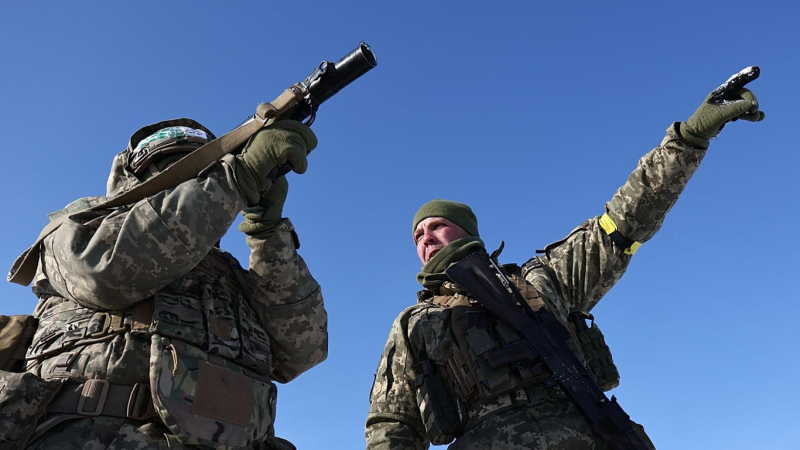
Ukrainian forces have stepped up their counteroffensive operations in several frontline sectors, reclaiming territory in southeastern and eastern Ukraine and reversing weeks of incremental Russian advances, according to battlefield assessments released this week.
Recent reports indicate that Ukrainian troops have liberated multiple small settlements in the Zaporizhzhia region, roughly 80 kilometres east of the regional capital. Analysts say the advances mark a notable shift after months of grinding positional warfare in which Russian forces had been attempting to consolidate gains made since mid 2025.
Beyond Zaporizhzhia, Ukrainian units have also reported progress along parts of the Kharkiv, Kostiantynivka, Pokrovsk and Novopavlivka fronts. In several areas, Kyiv’s forces appear to have slowed or halted Russian offensives, stabilising defensive lines and launching targeted counterattacks.
Military observers suggest that improved coordination, concentrated artillery use and more effective drone deployment have played a role in the recent gains. The Institute for the Study of War noted that Ukrainian operations are likely benefiting from disruptions to Russian battlefield communications and drone capabilities.
A key factor appears to be changes in access to satellite internet systems. Ukrainian authorities and SpaceX have taken steps to prevent unauthorised use of Starlink terminals Russian forces. Ukrainian officials previously reported that Russian troops had mounted satellite systems on attack drones to enhance operational range and evade electronic jamming.
Following the introduction of stricter registration controls and a verification system for Starlink terminals operating in Ukraine, Russian military sources and pro Kremlin commentators reported communications difficulties. Analysts believe these disruptions may have affected command and control structures at tactical levels, potentially weakening Russian responsiveness in contested sectors.
In parallel, Ukrainian cyber units claim to have conducted an information operation targeting Russian efforts to restore satellite connectivity. According to Ukrainian statements, the operation gathered data related to terminals allegedly used Russian forces and passed the information to defence authorities. Ukrainian officials say several terminals were subsequently disabled.
While the impact of these measures on overall battlefield dynamics remains difficult to quantify independently, the timing coincides with Ukraine’s renewed territorial push. Kyiv has framed its recent advances as evidence that Russian forces are struggling to secure positions needed for any large scale summer offensive.
Ukrainian officials have previously warned that Moscow could seek to launch new operations toward Slovyansk Kramatorsk or deeper into the Zaporizhzhia axis later in 2026. However, current battlefield conditions suggest Russian units are facing logistical and coordination challenges.
The renewed Ukrainian momentum also comes as diplomatic discussions continue internationally regarding the broader conflict. Military developments on the ground often influence negotiating positions, and territorial shifts may shape future political calculations.
Fighting remains intense across multiple sectors, with both sides sustaining losses. Despite localised advances, the front line remains fluid, and control over small settlements can change rapidly in ongoing combat operations.