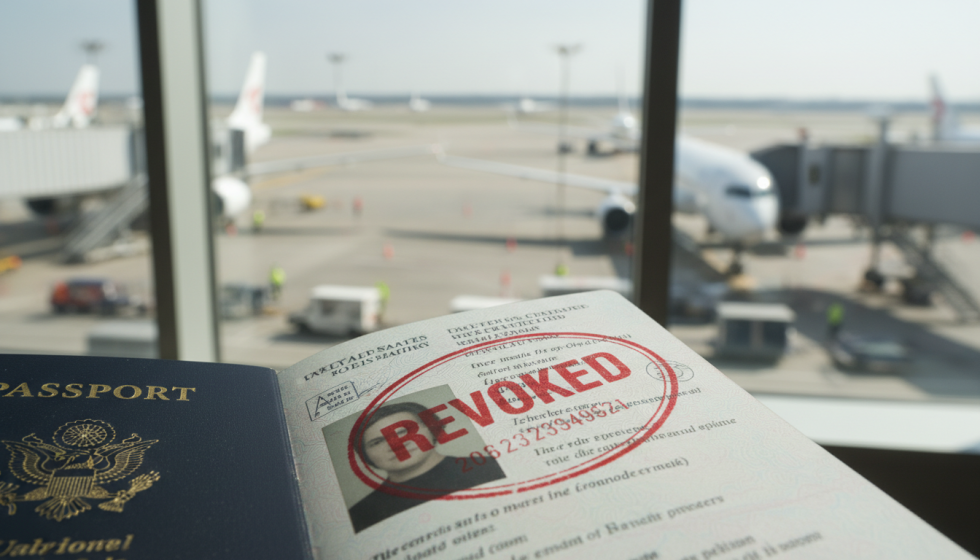
New Passport Rules Have Landed
So, the feds are cranking up the pressure on parents who’ve apparently forgotten what child support means. They’re widening the net, going after those with overdue payments with a new passport restriction rule that’s got state agencies scrambling to push more cases into the federal pipeline. Here’s the kicker: they’re dressing this up as a compliance move, not some sort of criminal witch hunt. It’s all under the watch of the Office of Child Support Enforcement at the US Department of Health and Human Services, doing its thing under Title IV-D. The lovechild of increased collections and procedural consistency across states, or so they say.
Travel Plans Are About to Get Complicated
If you owe, you’re staring down the barrel of uncertainty regarding that much-needed jaunt abroad. Picture this: a routine passport application gets rejected, or worse, your current passport falls under the federal axe because your case has been flagged. The US State Department is playing its cards close to the chest, with guidance that leaves many families in the lurch when they try to renew. If you’ve followed the latest in compliance theatrics, like NFT Regulation Could Reshape Digital Assets Market, you’ll see how swiftly compliance can become a game-changer. State agencies are now sending clearer signals to dodge those airport surprises—no one wants that nightmare.
Legal Headaches and Social Fallout
Legal eagles are waving red flags, claiming this policy reinforces a civil enforcement protocol but potentially violates due process for parents challenging their old debts. Under the existing US game plan, states signal debts to Uncle Sam, and voilà, passport troubles ensue before you’ve had time to plead your case. The latest twist? State agencies are tightening their verification processes before certification; suddenly, everyone seems to want to review payment histories like a nosy neighbour. The State Department is laying out the steps to tackle a denial teaming up with your local child support agency. Live caseload monitoring is also on the up, with staff being shoved into faster case reviews and speedy error fixes.
What This Means for Families
While families getting support might see quicker payments when a deadbeat parent can’t travel, this also has the potential to mess with jobs that require hopping on planes frequently. You’re stuck in a tug-of-war, where passport restrictions can offer a slim chance for desperate payment negotiations, and some states are even promoting rapid reinstatement as soon as arrears dip below federal limits. It’s all fed to custodial parents as a fancy accountability measure, even when other avenues have hit a brick wall. For a deeper dive into enforcement dilemmas, check out Trump’s July 4 Deadline Stirs the EU Trade Deal Pot, illustrating how policy deadlines force compliance. Expect to see family court dockets fill with motions for recalculating payments and order modifications.
How Do We Stack Up Internationally?
Globally, governments have an eclectic toolkit for enforcing support orders, from slapping on wage garnishments to yanking licenses, but passport actions? They’re rare—and often tangled up in larger debt recovery schemes. In the US, child support enforcement is a well-oiled machine under the Title IV-D umbrella with federal oversight and state execution, paving the way for passport restrictions on a much grander scale. This is markedly different from countries that solely rely on courts to throw contempt proceedings around. Major outlets often dust off comparative analyses regarding government authority and consumer rights, particularly when travel documents are on the chopping block. At the end of the day, the US method tends to favour uniform administrative triggers rather than individual judicial travel bans—a contrast that’s hard to miss in the chatter from Washington, DC.