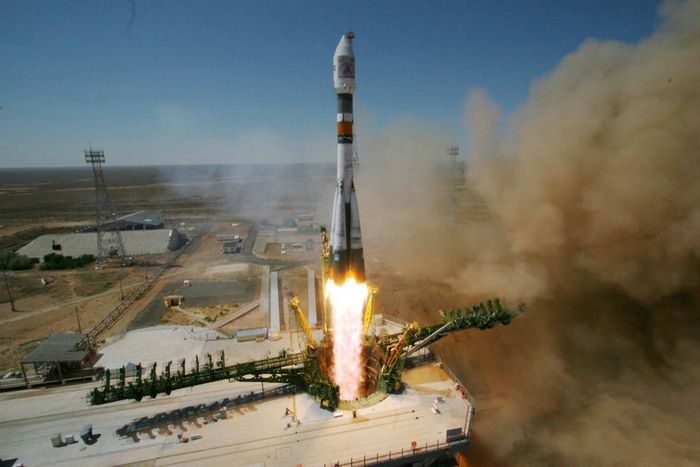
Russia has launched three Iranian communications satellites into orbit, according to Iranian state media, highlighting the growing technological and strategic cooperation between Moscow and Tehran amid continued international pressure on both countries.
Iranian state television reported that the satellites were successfully placed into orbit on Sunday aboard a Russian launch vehicle. The mission marked the second time since July that Russia has carried out a satellite launch on Iran’s behalf, reinforcing a partnership that has expanded across military, economic and technological domains in recent years.
While Iranian officials did not disclose detailed technical specifications, the satellites were described as communications platforms intended to enhance Iran’s civilian capabilities. Such satellites are typically used for data transmission, telecommunications and broadcasting, though Western analysts often note that space based technologies can also have dual use potential, supporting both civilian infrastructure and security related applications.
The launch was conducted Russia’s space agency using facilities at the Baikonur Cosmodrome, a site long used for international satellite missions. Russian launches for foreign partners have continued despite sanctions, allowing Moscow to maintain a role in global space services even as its cooperation with Western space agencies has declined.
For Iran, reliance on Russian launch capabilities reflects ongoing constraints on its own space programme. Tehran has made progress in developing domestic rockets but has faced repeated setbacks, including failed launches and technical limitations. Partnering with Russia provides a more reliable route to orbit while allowing Iranian engineers to gain operational experience.
The growing frequency of such launches has attracted attention from the United States and its allies, who have expressed concern about closer coordination between Russia and Iran. Critics argue that enhanced space cooperation could complement military collaboration, particularly as both countries face isolation from Western defence and technology markets.
Moscow and Tehran, however, have consistently framed their cooperation as lawful and peaceful. Russian officials have said satellite launches for Iran comply with international space law, while Iranian authorities insist their space activities are aimed at development, disaster monitoring and communications rather than weapons related purposes.
The launch comes against a backdrop of broader geopolitical alignment. Russia and Iran have deepened ties since the outbreak of the war in Ukraine, expanding cooperation in energy, trade and defence. Space collaboration has become another visible symbol of that relationship, especially as Russia seeks alternative partners beyond Europe and North America.
Analysts say satellite launches also carry symbolic weight. Successfully placing satellites into orbit allows Iran to project technological competence to domestic audiences and regional rivals, while Russia demonstrates that it remains a capable and in demand space power despite sanctions and diplomatic isolation.
The three satellites are expected to operate for several years, depending on their design and orbital conditions. Iranian state media said initial signals were received successfully, suggesting the satellites are functioning as planned. Further details about their coverage areas and operational roles have not been released.
International observers will be watching closely for future launches. Since July, the pace of cooperation appears to be accelerating, raising the possibility that additional Iranian satellites could be launched Russia in the coming months.
For now, the latest mission underscores how space has become another arena where geopolitical partnerships are reshaping global alignments. As Russia and Iran continue to collaborate, their cooperation in orbit reflects not only technical necessity but also a shared strategic outlook in an increasingly divided world.