Denmark has taken a significant step toward modernising its armed forces acquiring eight unmanned ground vehicles to test how robotic systems could be integrated into future military operations. The trial programme reflects a broader shift among European militaries toward automation and risk reduction on increasingly complex battlefields.
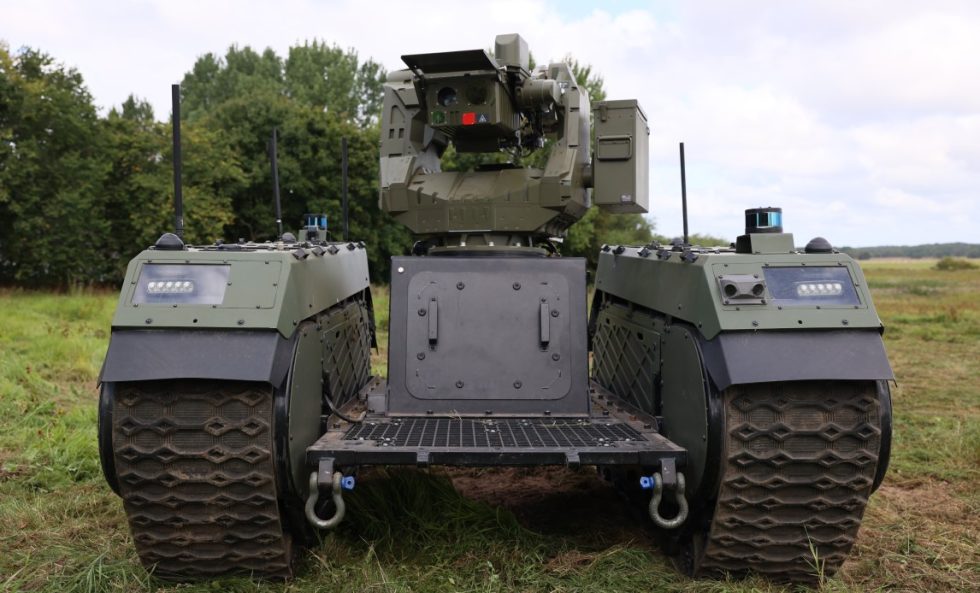
The unmanned ground vehicles, or UGVs, have been supplied two companies. Estonia based Milrem Robotics is delivering four of its THeMIS platforms, while UK company XRC Robotics is providing four MFP 1 vehicles. Both systems are designed to operate in challenging environments where deploying soldiers would carry significant risk.
The drones will be assigned to the Danish Army’s Combat Service Branch based in Slagelse, in western Denmark. From there, they will be put through a dedicated testing programme scheduled to begin this month. Military officials say the trials will focus on evaluating technical performance, operational reliability, tactical usefulness and the limitations of each platform under realistic conditions.
Copenhagen has made clear that the testing effort is informed in part lessons drawn from the war in Ukraine. The conflict has demonstrated how unmanned systems, ranging from aerial drones to ground based robots, can reshape the battlefield extending reach, improving situational awareness and reducing casualties. Danish defence planners say the programme is intended to assess whether similar benefits can be achieved with ground robots in a Nordic operational context.
UGVs are primarily viewed as a way to reduce risk to personnel taking on tasks in contested or dangerous areas. One of their main roles under consideration is logistics support. The vehicles can be used to transport ammunition, food and medical supplies to forward positions, allowing troops to remain under cover while maintaining resupply operations.
Another key application is reconnaissance. Equipped with cameras and sensors, UGVs can gather intelligence, monitor terrain and detect threats without exposing soldiers to direct danger. This capability is particularly valuable in urban environments or areas under constant surveillance or fire.
Some of the platforms being tested can also support combat operations more directly. Potential uses include casualty evacuation from areas under fire, where a robotic vehicle could extract wounded personnel without risking additional lives. In high risk scenarios, UGVs may also be used to deploy explosive charges or conduct other tasks that would be especially hazardous for human operators.
Danish military officials stress that the trials are exploratory rather than a commitment to immediate large scale deployment. The aim is to understand how such systems might complement existing forces, what training and support they require, and how they perform in Denmark’s specific terrain and climate conditions.
The programme also reflects Denmark’s wider defence posture. As a member of NATO, the country has increased investment in defence capabilities amid heightened security concerns in Europe. Experimenting with unmanned systems allows Denmark to remain aligned with allies who are also testing robotics and autonomous technologies.
Analysts note that while UGVs offer clear advantages, they also present challenges. Issues such as maintenance, cyber security, command and control integration and reliability under fire will all be closely examined during the trials. Results from the testing programme are expected to inform future procurement decisions and doctrine development.
As European militaries adapt to rapidly changing forms of warfare, Denmark’s ground drone trials highlight how even smaller armed forces are exploring advanced technologies to enhance effectiveness while prioritising the safety of their personnel.