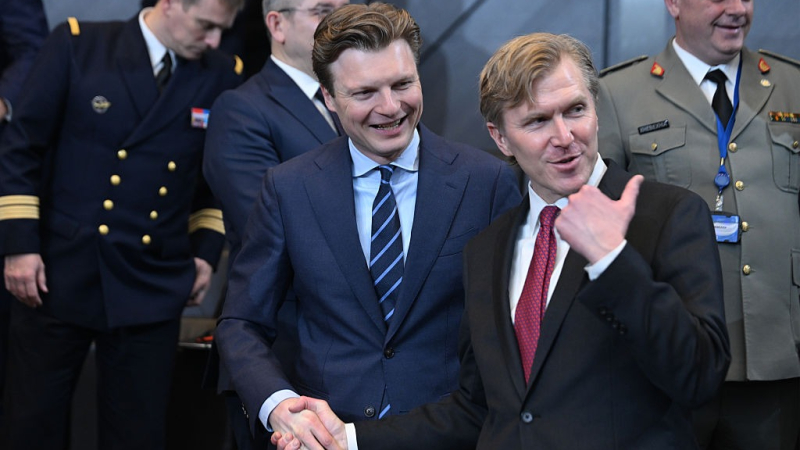
A meeting of NATO defence ministers in Brussels has underscored a shift within the alliance toward a greater European role in regional security, as the United States signals an increased focus on the Indo Pacific.
The gathering took place without U.S. Secretary of Defense Pete Hegseth, who was absent from the talks. In his place, U.S. Under Secretary of Defense for Policy Elbridge Colrepresented Washington. Colhas previously advocated for a strategic pivot away from Europe in favor of prioritizing China and the Indo Pacific region.
Speaking at the meeting, Colemphasized that the United States arrived with what he described as a positive message for the alliance. However, he also suggested that European members should assume primary responsibility for defending the continent. He referred to the idea of a NATO 3.0, where burden sharing reflects the alliance’s original Cold War framework and European allies take a leading role in regional security.
NATO Secretary General Mark Rutte welcomed the evolving approach, pointing to what he called a mindset shift among member states. According to Rutte, European allies have increased defence spending and begun assuming greater operational responsibilities, including taking over regional commands. At a NATO summit in June, allies pledged to raise defence budgets to 5 percent of gross domestic product, a significant escalation from previous targets.
European defence ministers echoed the message. German Defence Minister Boris Pistorius said it was natural for Europe to shoulder more of the responsibility for its own security. France’s Catherine Vautrin similarly indicated that European nations were prepared to strengthen their collective defence efforts. Dutch Defence Minister Ruben Brekelmans noted that Washington has clearly communicated its long term strategy, including a shift in focus toward Asia, and stressed the importance of maintaining open dialogue within the alliance.
The meeting also addressed security in the Arctic region. Ministers welcomed the launch of a new initiative known as Arctic Sentry, aimed at consolidating NATO activities in the High North. The move follows earlier tensions after comments U.S. President Donald Trump regarding Greenland’s strategic importance. Diplomatic efforts have since eased friction, and officials presented the new Arctic framework as evidence of renewed unity.
Iceland’s foreign minister said the alliance had been tested earlier in the year but remains cohesive. NATO diplomats described Arctic Sentry as a mechanism to coordinate existing operations under a unified structure, although some observers questioned whether it represents a substantive expansion or primarily a reorganization of ongoing efforts.
The Brussels meeting reflects a broader transformation within NATO as it adapts to shifting geopolitical priorities. With Washington placing increased emphasis on China and Indo Pacific stability, European members appear prepared to expand their leadership role in safeguarding the continent’s security framework.