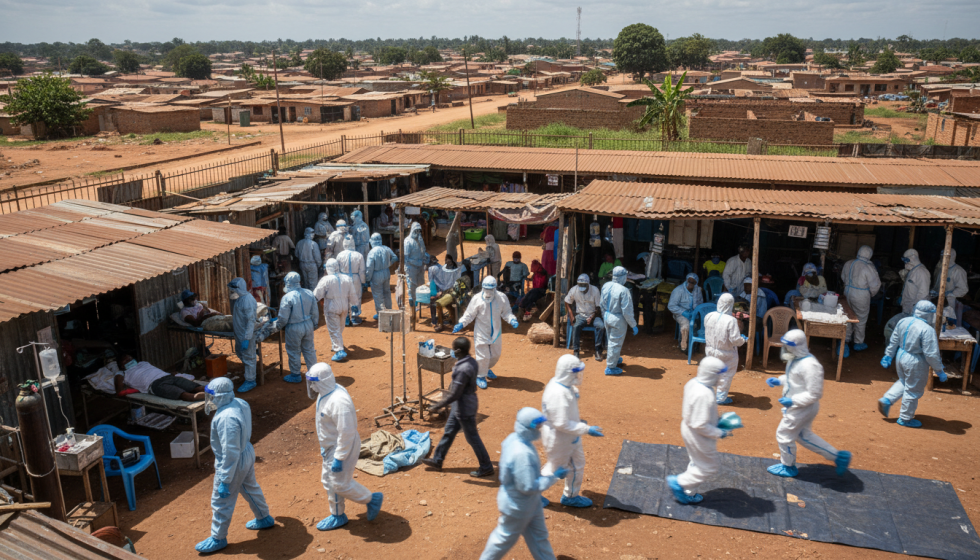
Ebola Outbreak Claims Over 100 Lives
Health officials in the Democratic Republic of the Congo are confronting a fast moving emergency as fatalities continue to mount. In a Today briefing, the Ministry of Public Health reported at least 100 deaths linked to Ebola, and said field teams are verifying additional suspected fatalities. Clinicians in affected zones described to the ministry that many patients arrived late, complicating care and contact tracing. An early Live situational note circulated among provincial responders highlighted gaps in transport for samples and staff. The ministry said an Update to the national alert system was issued to speed laboratory confirmation and prioritize isolation capacity. Provincial administrators urged residents to seek care quickly and avoid unsafe funerals.
Impact on Local Communities
Local leaders say the outbreak is reshaping daily life, with markets thinning and some river routes avoided as people weigh risk. A Today assessment from provincial authorities said schools in several areas modified schedules after families reported fear of gatherings. In the middle of response briefings, the Ebola outbreak has driven new rules for burials and visitation, and church networks have been asked to support safer mourning practices. Officials also warned that misinformation is undermining Live contact tracing, especially when families hide sick relatives. Community radio stations were given an Update script health educators to repeat symptom guidance and hotline numbers. Aid coordinators say food supply disruptions are now a secondary stressor for households already facing insecurity.
International Concerns and Exposures
International partners are watching the situation closely after health authorities confirmed that six Americans were exposed while working or traveling in the affected region. The Ministry of Public Health said Today that the individuals were assessed under standard protocols and their monitoring status was shared with relevant embassies. In a Live coordination call, the World Health Organization said cross border screening and risk communication were being reinforced at key transit points. For context on how countries frame outbreak responses, a separate BBC explainer on preparedness can be read at How countries are responding to hantavirus. An Update circulated to humanitarian groups also flagged the need to protect health workers after several recent security incidents, and related global diplomacy reporting is available via Gallagher in Cape Verde on Vatican peace diplomacy.
Response Efforts Health Authorities
Health authorities say the operational focus is now on speeding confirmation of suspected Ebola cases and tightening infection prevention in clinics that first receive patients. The Ministry of Public Health said Today that rapid response teams were deployed to expand isolation space and strengthen triage at facilities reporting clusters. In the middle of its guidance, the ministry said the Ebola outbreak response includes targeted vaccination for contacts where supply and security allow, alongside training for safe sample handling. A Live dashboard shared with partners tracks alerts, lab results, and follow up completion rates health zone. Another Update directed responders to prioritize protective equipment distribution to high risk wards and to audit ambulance decontamination, with broader security conditions affecting field movement also covered in US Extends Lebanon Israel Ceasefire Amid Strikes.
Future Implications for Global Health
Public health experts say the immediate priority is breaking chains of transmission while keeping routine care running, because secondary deaths can rise when clinics are avoided. The World Health Organization said Today that lessons from recent epidemics point to faster surveillance, clearer community engagement, and predictable funding for responders. In the middle of those discussions, analysts warned that repeated Ebola outbreaks in DR Congo strain regional laboratories and make it harder to maintain trained staff between emergencies. Live monitoring of travel routes is expected to continue until case counts stabilize and contact follow up is consistently high. An Update to regional preparedness plans is also being drafted with neighboring ministries, focusing on training, supply stockpiles, and data sharing. The next weeks will test whether coordination can outpace fear and violence in affected areas.