European firefighting mobilization and EU wildfire readiness
EU institutions and member states are preparing for another intense wildfire season as European firefighting mobilization is moving earlier this year. In Brussels, the European Commission said the aim is faster cross-border assistance when national services are stretched extreme heat and longer fire windows. Coordination runs through the EU Civil Protection Mechanism and the Emergency Response Coordination Centre, which handle asset pooling and dispatch support. Commission officials suggest that pre-positioning aircraft and mixed ground teams can potentially cut response times when multiple regions face simultaneous ignitions. The Commission has also pointed to lessons from recent summers, noting overlapping large fires can strain aviation capacity, logistics, and crew rotations across southern and central Europe.
Pre-positioned teams and aircraft for peak season
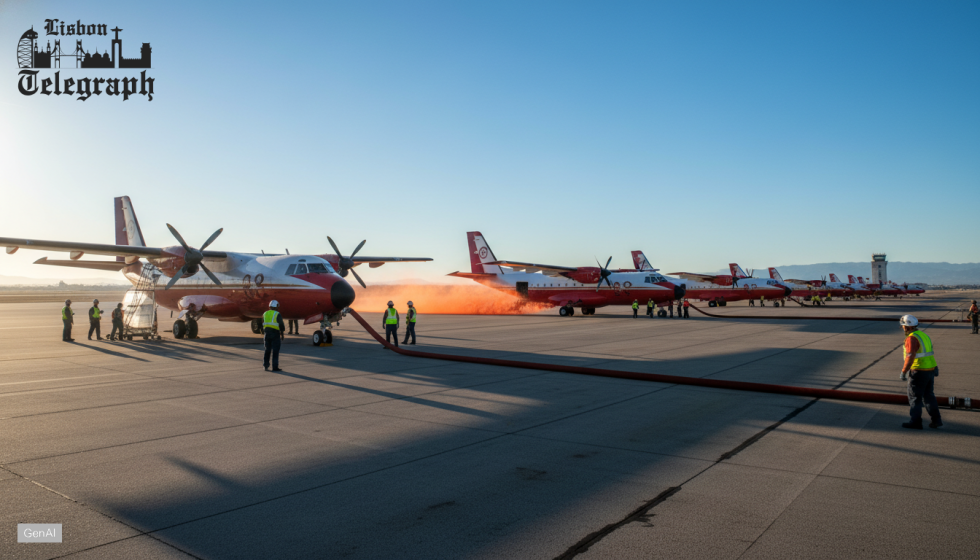
2024 preparations include expanded pre-positioning of EU-supported assets, with aircraft and crews staged where risk is assessed as highest ahead of major ignitions, according to the European Commission. Dispatch coordination is managed the Emergency Response Coordination Centre under the EU Civil Protection Mechanism, which routes requests for assistance and supports rapid deployment decisions. Regional cooperation pressures are also discussed in Tunisia drives Africa’s climate agenda with focus on technology and regional cooperation, which highlights how shared planning can reduce delays during climate-linked shocks. For broader context on escalating hazard drivers, UNEP outlines climate risk in the Emissions Gap Report 2023. This approach relies on interoperability so mixed teams can operate under unified safety procedures across borders as European firefighting mobilization scales up.
Cross-border procedures to speed assistance between member states
Member states are aligning procedures so cross-border assistance can potentially move faster when conditions deteriorate in multiple places, according to European Commission briefings on civil protection coordination. The Commission has said that pre-season planning reduces friction around customs, landing rights, staging areas, and refuelling arrangements needed for rapid reinforcement. Under the EU wildfire strategy, liaison officers and joint scenario exercises aim to improve the handoff between national incident commanders and incoming crews, as described EU civil protection officials. European firefighting mobilization efforts depend on this coordination because surge capacity only helps if it can be integrated on arrival without delays or duplicated tasks. Communications is widely treated as a practical constraint, and officials have said they continue to push shared radio protocols and compatible mapping formats during joint deployments and training, including work centered in Brussels.
Technology, mapping, and data-led dispatch decisions
Operational teams are pairing manpower with situational awareness tools to reduce guesswork during fast-moving fire behavior. The European Commission has promoted satellite-based mapping and near real-time damage assessment to help prioritize protection of communities and critical infrastructure. Firefighter deployment decisions increasingly depend on modeled spread, verified field reports, and consistent data standards, according to Commission statements on operational support tools. In the same policy ecosystem, the EU is also advancing shared technology benchmarks in other safety domains, as described in EU roadmap boosts animal-free chemical testing shift. For Portugal facing recurring summer risks, travel and enforcement pressures can also intersect with emergency operations, including road controls and access limits covered in Portuguese road code: Portugal plans tougher fines.
What officials expect as conditions intensify
Even with stronger preparations, Commission officials note that concurrent large incidents can still strain aerial fleets, rest cycles, and supply chains. The European Commission suggests that pre-positioning is intended to buy time, not replace national responsibility, and that local prevention measures remain decisive when fire weather escalates. For the coming wildfire season, officials indicate a key stress test will be whether shared assets can be rotated quickly enough to avoid exhaustion and maintain safety margins for ground crews. European firefighting mobilization will be evaluated response speed and containment outcomes, and whether it limits disruption to transport corridors and power networks during peak demand, as EU officials have framed it. Coordination teams are expected to keep refining early dispatch triggers so small outbreaks can be addressed before they become regional emergencies, according to Commission commentary on lessons learned.