Health Officials Struggle to Contain Ebola
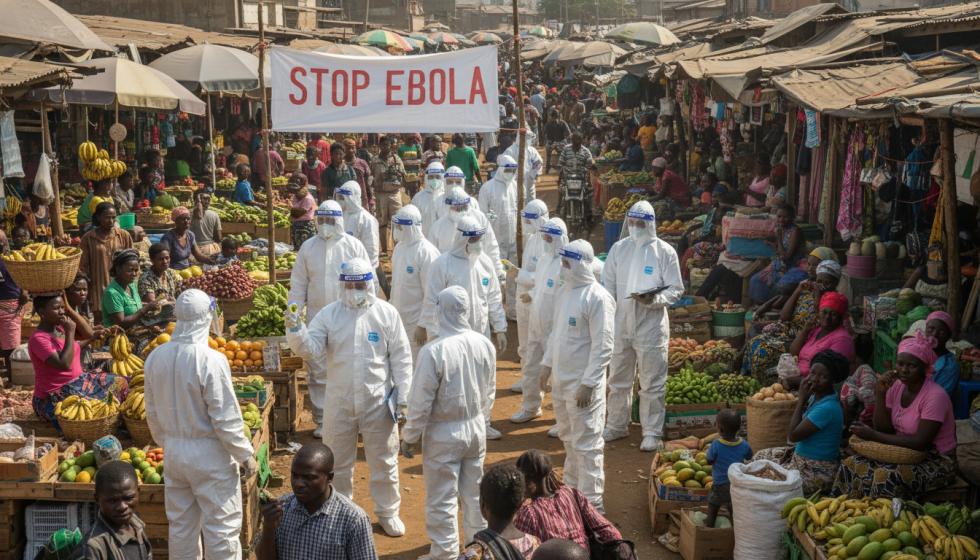
Health teams in eastern DR Congo are working under tight security and severe logistics constraints as new chains of transmission are investigated. In field briefings Today, response leaders said the immediate priority is isolation capacity, safe burials, and contact tracing across multiple health zones. Clinicians describe the ebola virus outbreak 2026 as hard to manage when patients arrive late and facilities run short of protective equipment. The UN said hundreds of suspected cases have been recorded and that vaccine access is not available in the affected area, as outlined UN News in its 16 May dispatch. Live monitoring posts have been expanded at key road crossings to reduce onward spread.
Impact of the Virus on Local Communities
Families are changing routines as fear reshapes daily movement, with markets thinning and some parents keeping children at home. Community leaders told local radio during a Live call-in that stigma is rising around survivors and health workers, worsening delays in care. An Update from UN News said the outbreak is unfolding alongside hunger and displacement pressures, which complicates quarantine and follow-up in crowded settings; the UN account details how insecurity and lack of transport slow referrals from villages to treatment units, see UN News on Ebola amid hunger and displacement in DR Congo. In a separate civic appeal about truthful public communication, Pope Leo XIV urges truthful communication in media was cited church-run outlets as guidance for countering rumor.
Government Response and Challenges
Provincial authorities have ordered tighter screening at clinics and have urged rapid reporting of symptoms to limit silent transmission. The Health Ministry has also leaned on neighborhood committees to help verify contacts, officials said in an Update shared with regional press pools. Coverage of the ebola virus outbreak 2026 has highlighted how insecurity blocks access to some communities and forces teams to suspend outreach when clashes flare. Lisbon Telegraph has reported on operational strain in conflict areas and the impact on response timelines, see DR Congo Ebola response strained conflict zones. Today, analysts say these gaps create windows where cases can move between villages undetected, increasing pressure on limited labs.
International Aid and Support Efforts
International agencies are prioritizing protective supplies, mobile laboratories, and support for infection prevention in general hospitals that still treat routine emergencies. UN coordinators said the congo ebola outbreak 2026 response is being integrated with assistance for displaced people so that isolation does not cut families off from food and basic care. A Live coordination note from UN teams warned that health facilities are overloaded, and staff attrition is growing after repeated exposure to traumatic caseloads. UN News has also described the outbreak as a Public Health Emergency of International Concern, which can speed coordination and funding, see UN News on the PHEIC declaration for Ebola. The same partners are urging consistent risk communication in local languages.
Future Outlook for DR Congo and Ebola
The next weeks will hinge on whether tracing can keep pace as people travel for work and safety, and whether clinics can sustain strict infection control. Public health officials said Today that every missed contact increases the chance of a wider ebola outbreak 2026 beyond the current cluster, especially where referral routes are disrupted. Technicians are assembling an ebola outbreak 2026 map for operational use, combining alerts from community surveillance with lab confirmations, while emphasizing that public versions must avoid exposing households. Live briefings are expected to continue daily to align provincial teams, aid agencies, and local leaders. Another Update from responders stressed that rebuilding trust through transparent care, dignified burials, and reliable supplies will be as decisive as any clinical protocol.