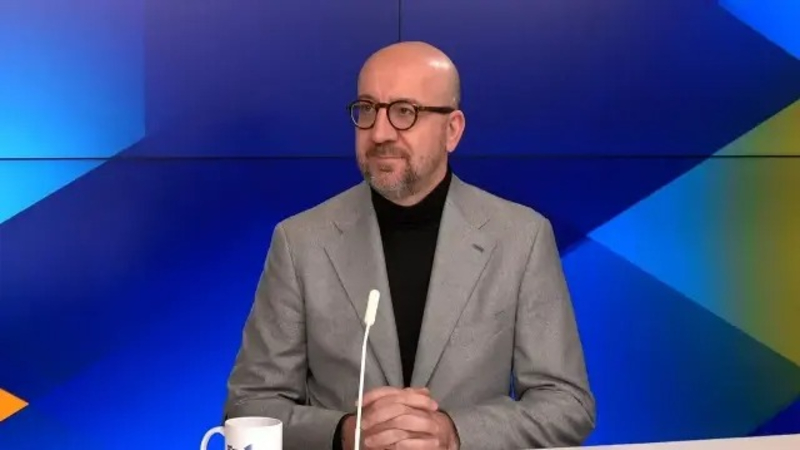
Former European Council President Charles Michel has criticised NATO Secretary General Mark Rutte, urging him to focus on unity within the alliance rather than maintaining what he described as an overly deferential relationship with the United States. Speaking in an interview, Michel said he was increasingly disappointed with Rutte’s leadership at a time when NATO faces internal strain and mounting external pressure. He argued that the alliance requires a firm and independent voice capable of defending collective interests, particularly as relations with Washington become more unpredictable. According to Michel, NATO’s cohesion risks being undermined if its leadership appears aligned too closely with the agenda of any single member, especially amid heightened geopolitical tensions involving Europe’s security and territorial integrity.
Michel warned that diplomatic strategies based on flattery and personal rapport would be ineffective in addressing current challenges confronting the alliance. He pointed to growing unease among European leaders over recent rhetoric and actions from Washington, including disputes related to Greenland and broader transatlantic relations. In his view, Europe has demonstrated loyalty as a partner but now expects stronger advocacy from NATO leadership in defence of shared principles and mutual respect. Michel said that failure to confront these issues directly could weaken trust among allies at a moment when coordination and clarity are essential. He stressed that NATO’s role should be to balance interests and reinforce unity, rather than absorb or deflect external pressure without response.
Beyond NATO leadership, Michel also addressed wider European security concerns, including the ongoing war in Ukraine and future peace negotiations. He argued that European leaders must have a direct role in any talks shaping the continent’s security landscape, warning that European interests risk being sidelined if decisions are taken elsewhere. Michel expressed support for Ukraine’s ambition to join the European Union 2027, describing the goal as achievable with political will. His comments reflect broader debates within Europe about strategic autonomy, alliance leadership and the need for stronger collective positioning as geopolitical uncertainty continues to grow across the region.