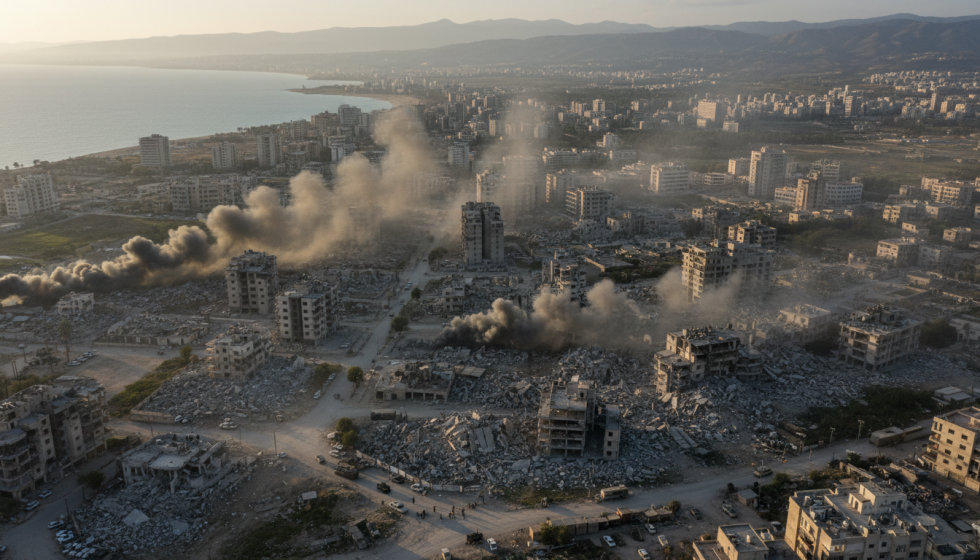
Israeli Air Strikes Hit Lebanon
Israeli air strikes hit multiple areas across Lebanon, puncturing what residents and local officials described as a ceasefire environment and shifting the pace of events on the ground. Today, the strikes were framed Israel as responses to security threats, while Lebanese authorities described them as a major escalation that undermined assurances made through intermediaries. In Live conditions, emergency crews reported simultaneous impacts that complicated access to affected neighborhoods, with communications and road movement disrupted in the hours that followed. An official Update from Lebanese security sources said the pattern of targets suggested a broad operational sweep rather than isolated action, heightening concern that the truce framework is being interpreted narrowly or sidelined altogether. The immediate outcome was new displacement pressure and renewed fear in communities that had begun to reopen schools and businesses.
Ceasefire Agreement Details
Ceasefire agreement details quickly became the center of dispute, with both sides pointing to different readings of obligations and enforcement mechanisms within the Lebanon ceasefire framework. A second Update from Lebanese officials said the understanding relied on de-escalation steps, monitoring, and a commitment to avoid strikes that could be seen as punitive rather than preventive. Israel, for its part, continued to emphasize freedom of action against perceived imminent threats, a position that leaves little margin for error when intelligence is contested. Market and risk sentiment has moved in parallel with security headlines, and a separate analysis on ceasefire-driven market calm illustrated how quickly expectations can reverse when violence resumes. Reporting from BBC coverage of the latest strikes and diplomacy also underscored the fragility of any arrangement that lacks clear verification and consequences for breaches.
Impact on Lebanese Civilians
Impact on Lebanese civilians was immediate, with hospitals reporting a surge of casualties and local municipalities describing damage to housing and essential services. In several districts, families who had returned after earlier fighting moved again, citing the unpredictability of strikes and the fear of follow-on raids. Aid coordinators said the timing was particularly disruptive because clinics had only recently restored limited capacity and supply lines, and a further wave of attacks risks severing those routes. Today, municipal teams said they faced shortages of fuel and equipment for debris removal and ambulance transport, while volunteers tried to fill gaps in first response. Live updates shared local reporters described long traffic queues on key corridors and intermittent mobile coverage that slowed family reunification. The human cost also extended to schooling, with administrators pausing attendance plans and shifting to reduced schedules as safety guarantees evaporated.
Regional Reactions and Tensions
Regional reactions and tensions hardened rapidly, with Middle East conflict diplomacy pushed into crisis-management mode rather than confidence-building. Beirut appealed to international partners to reinforce deterrence against further strikes, while regional actors recalibrated messaging to avoid being drawn into a wider confrontation. Washington emphasized de-escalation, but officials also faced questions about leverage and the credibility of warnings when violations appear to continue. The risk calculus is complicated broader strategic friction tied to the US-Iran war narrative that shapes militia activity, shipping security, and retaliatory postures across several fronts. Observers noted that cross-border incidents tend to create political pressure for visible responses, which can become self-reinforcing even when leaders privately prefer restraint. An internal report at Lisbon Telegraph’s briefing on US-Iran ceasefire stress highlighted how fast parallel tracks can collide, making local ceasefires harder to sustain amid regional brinkmanship and competing red lines.
Future Prospects for Peace
Future prospects for peace now depend on narrowing interpretations of permitted action, improving monitoring, and restoring credibility that commitments will be honored in practice, not only on paper. Diplomats argue that re-establishing predictability requires clearer notification channels and independent assessment of contested claims, because each new incident erodes the political space for restraint. For Lebanon, the priority is civilian protection and continuity of basic services, while Israel’s priority remains preventing attacks and limiting the operational freedom of hostile actors. Coverage at Lisbon Telegraph’s report on the truce fraying emphasized that sustainable calm will be measured less statements and more the absence of shocks that force mass movement and emergency closures. Live conditions remain volatile, yet negotiators continue to pursue mechanisms that can absorb violations without collapsing entirely. A durable settlement still hinges on enforceable steps that reduce incentives for unilateral escalation and keep civilians out of the line of fire.