Drone Strategy Disrupts Russian Operations
Ukrainian commanders describe a campaign that now treats long range drones as an operational tool, not a novelty. In briefings Today, units emphasize repeatable strike cycles, launch discipline, and careful selection of targets that force Russian logisticians to re plan routes and air defenses. In one current planning picture, robert brovdi ukraine drone commander is presented Ukrainian officials as aligning drone tasking with broader pressure on fuel supply and troop confidence. The approach is framed as persistent rather than spectacular, with each sortie designed to trigger air raid alerts, disperse guard units, and complicate maintenance schedules. Live monitoring feeds are used to verify effects and support an Update cadence for the next window.
Key Targets: Oil Facilities and Troop Morale
Officials in Kyiv have recently emphasized energy sites and air defense nodes as priority points, tying Russian oil targets to both revenue and mobility. The BBC noted heightened security concerns around Russian public events in its coverage of Moscow parade changes, which Ukrainian analysts cite as part of the wider pressure environment in Live conditions; see BBC on Moscow Victory Day parade scaling back. A separate line of effort focuses on military morale, aiming to keep units under constant warning and fatigue while limiting their ability to rest. In parallel, editors tracking Update timelines linked the climate of anxiety to repeated alert cycles. For context on global price sensitivity tied to disruption risk, Pope Leo XIV talks Middle East with EU Council also reflects how leaders frame regional stability in real time.
Technology Behind Ukrainian Drone Success
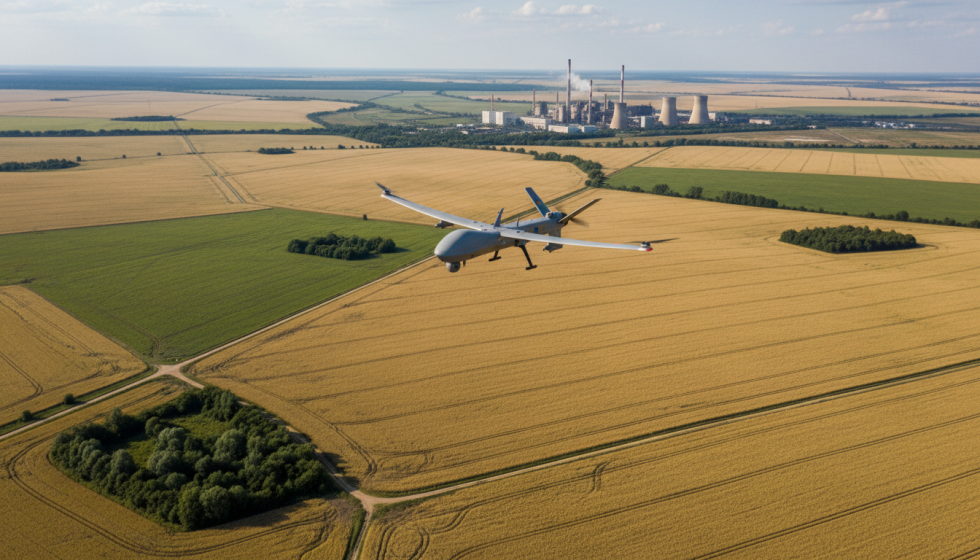
Ukraine’s current drone warfare Ukraine narrative is increasingly about integration, how crews blend navigation, electronic counter countermeasures, and mission timing with intelligence. Defense officials say flight planning now accounts for decoys, terrain masking, and split formations that test response time. In that picture, robert brovdi ukraine drone commander is cited in Ukrainian military communications as pushing a production mindset, emphasizing rapid iteration and standardized procedures over one off improvisation. The technical edge is described as less about a single airframe and more about the whole chain from assembly to launch to assessment. Today, operators also stress resilience under jamming, and Live telemetry, when available, is treated as a fast Update input for route changes and payload adjustments.
Impact on Ground Troops and Battle Outcomes
Commanders argue that effects are measured in tempo, not just damage, because repeated alarms and dispersals slow movements and degrade planning. Ukraine drone commander messaging highlights that even limited strikes can force additional guard duties and reduce training time, which can feed into military morale over weeks. Separately, market watchers treat any sustained pressure on refineries as a signal for wider energy uncertainty, and Oil hits $119 as Iran blockade fears rattle markets illustrates how quickly prices respond when traders anticipate supply risk. Ukrainian officials say the front line benefit comes when Russian units arrive later, with fewer reserves, or with air defenses pulled from other sectors. Live battlefield reporting is used to validate whether an Update in strike patterns corresponds with observed shifts in movement and readiness.
Future of Drone Warfare in Ukraine Conflict
Near term planning described Ukrainian officers focuses on sustaining sortie rates while widening the set of defended routes Russia must cover, with briefings pointing to late 2024 as a period when the learning loop was tightened. The intention is to keep Russian commanders reacting, building a cycle where each interception still consumes missiles, fuel, and crew time. Today, Ukrainian briefings emphasize learning loops, strike assessment is fed into procurement and training within days, then redistributed as an Update for other teams. Analysts also note the political dimension, since visible air defense strain can be used in diplomacy to argue for more support and faster deliveries. In this environment, Live data streams and after action reviews matter as much as hardware. The operational claim from Kyiv is that the campaign’s value lies in compounding pressure across logistics, air defense posture, and morale without pausing for a single headline moment.