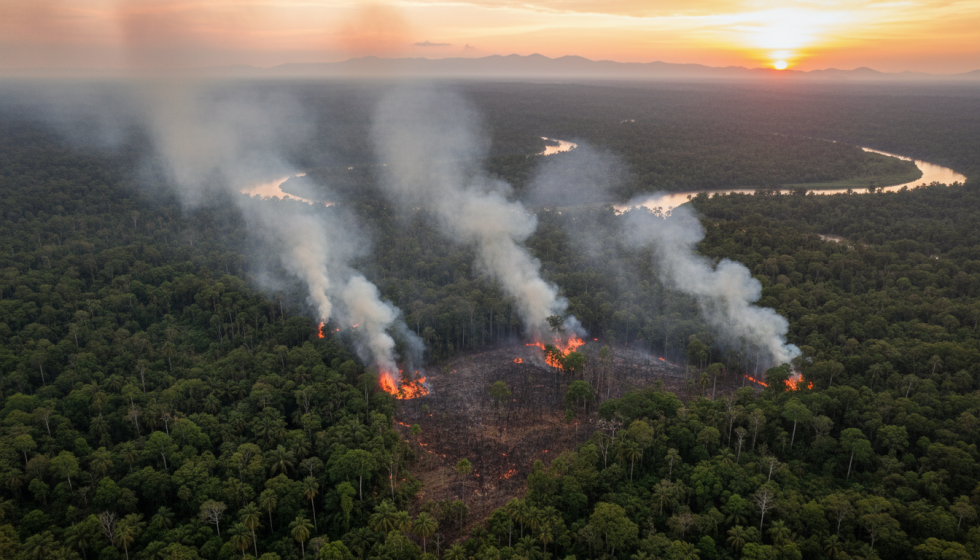
Global Decline in Forest Loss Observed
Government monitors and research groups are flagging a measured shift in the forest ledger as new annual datasets are compiled. In many tropical countries, enforcement and supply chain scrutiny are being cited more often in official briefings as drivers of reduced clearing. Midway through these assessments, global forest loss is being discussed less as an inevitability and more as a metric that can be bent with policy. Today, newsroom teams are tracking how quickly agencies publish maps that confirm where declines are real and where they simply reflect delayed detection. Live comparisons across basins are highlighting uneven outcomes between protected landscapes and frontier zones. The next formal Update is expected to sharpen how much of the slowdown comes from lasting rule changes versus short term market shifts.
The Threat of El Nino Fires
Fire agencies are preparing for a more volatile dry season, with El Nino fires already shaping contingency planning in parts of the tropics. The World Meteorological Organization has described El Nino as a recurring climate pattern that can shift heat and rainfall, a setup that can intensify fire weather in some regions. In that context, global forest loss could rebound quickly if ignition rises in drained peatlands and degraded edges. Today, several ministries are prioritizing rapid response units and tighter burn restrictions as conditions tighten, and Live fire dashboards are becoming central to public warnings. For broader context on environmental financing pressure points, UNEP analysis in State of Finance for Nature 2023 outlines the scale of investment gaps facing conservation. The next Update will hinge on whether early season bans are enforced consistently.
Impact on Biodiversity and Climate
Scientists stress that the stakes go beyond hectares, because species loss and emissions can accelerate when remaining forests are fragmented. In its annual assessments, Global Forest Watch has said tree cover loss and fire signals can rise sharply during hot, dry cycles, which makes rapid detection essential for enforcement. That monitoring focus sits alongside the policy debate, where global forest loss is increasingly treated as a proxy for both habitat security and climate exposure. For readers tracking how data driven oversight is expanding across sectors, Holy See brings St. Hildegard to Venice Biennale illustrates how institutions are also leaning on documentation and transparency in public facing initiatives. Today, conservation groups are watching for spillover effects as smoke and heat stress push wildlife toward smaller refuges. Live field notes from protected area staff often describe more human incursions when waterways drop and access improves. The next Update is expected to quantify biodiversity risks in newly mapped hotspots.
Efforts in Conservation and Reforestation
Officials and donors are trying to lock in gains blending enforcement with restoration that can survive future heat. Several national environment ministries have highlighted jurisdiction wide approaches that tie permits, land registries, and satellite alerts into one compliance chain, aiming to make illegal clearing harder to hide. Within that push, global forest loss is being used as a performance indicator for budget decisions and for corporate sourcing audits. Today, reforestation programs are also being redesigned to favor native species mixes that reduce fire spread and improve water retention. On the business side of traceability tools, Used Car Market in Portugal Sees Digital Shift as RMBT Enables Cross-Currency Vehicle Purchases shows how digital verification systems are becoming mainstream, a parallel that forest programs are echoing through chain of custody platforms. Live tracking of planting sites is increasingly paired with verification methods that flag low survival plots early. The next Update will likely focus on whether restoration contracts include long term maintenance.
Future Outlook and Mitigation Strategies
Near term progress will depend on how well countries manage ignition risks while keeping land governance reforms intact. UNEP warned in its Emissions Gap Report 2023 that the world remains off track on emissions cuts, which raises pressure to protect high carbon ecosystems such as intact rainforests. Against that backdrop, environmental threats linked to heat, drought, and illegal expansion are being treated as compound risks rather than isolated events. Today, climate services are refining seasonal outlooks to help provinces preposition crews and equipment, and Live coordination centers are experimenting with shared radio and drone protocols. The next Update many officials want is a clearer breakdown of which interventions reduce fires at the landscape scale without displacing clearing into neighboring districts.