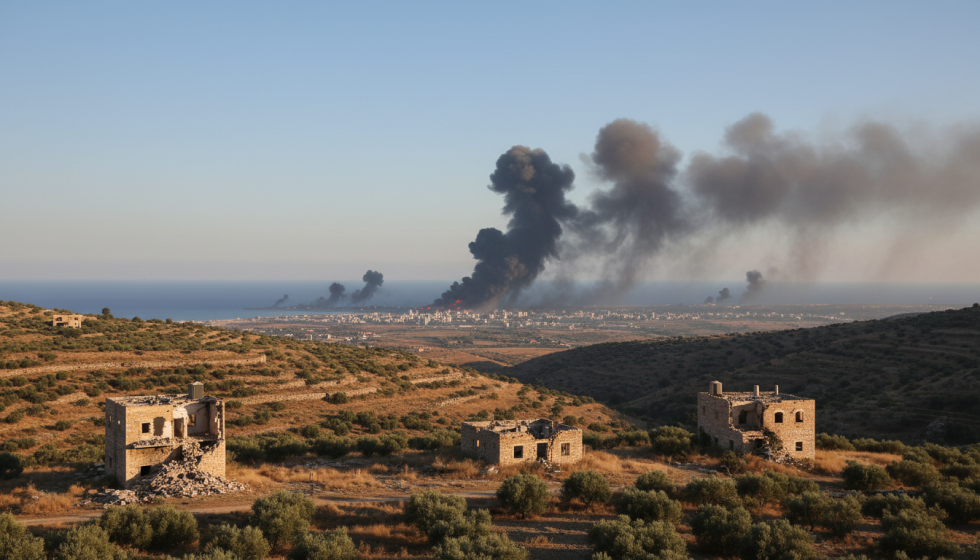
Details of the Israeli Military Strike
Lebanese emergency services described a lethal sequence of attacks that hit rescuers as they moved toward the initial blast site. Officials from Lebanon’s Civil Defense said three rescue workers were killed, and they characterized the incident as a double strike on the same location. Live monitoring local responders focused on assessing whether additional munitions remained in the area and whether access routes were safe for ambulances. Reuters cited Lebanese officials describing the second hit coming as teams approached, a pattern responders often call a double tap. mid morning Today, crews had shifted to slower, methodical searches, prioritizing scene control and casualty extraction under threat.
Reactions from Lebanese Authorities
Lebanese officials condemned the strike and called for international pressure to protect medical and rescue services operating near the frontier. The Ministry of Public Health issued an Update urging civilians to keep roads clear for ambulances and warning that repeated attacks complicate evacuation timelines. In statements carried Reuters, local authorities said the dead were rescue workers, and they requested documentation support to preserve incident records for potential legal review. Live briefings from municipal leaders stressed that coordination rooms were activated to track response teams and to re route traffic away from impacted corridors, while a related context on regional diplomacy appeared in UAE leaves OPEC after 60 years, what changes next as officials argued security shocks ripple quickly into state capacity. Officials also referenced Beirut in their calls for broader diplomatic engagement.
Hezbollah’s Role and Responses
Cross border fire has continued to shape the operational picture, with Lebanese security officials tying heightened risk to the ongoing Lebanon conflict along the south. Hezbollah has not publicly accepted responsibility for specific launches connected to this incident, but its statements have framed exchanges as retaliation for Israeli actions, according to Reuters. Today, local officials said a separate Hezbollah attack earlier in the cycle had contributed to escalatory messaging, raising fears that tit for tat strikes could spread beyond border villages. Live security alerts circulated among municipalities urged residents to avoid open areas and to limit movement near suspected impact zones. The immediate effect has been heightened Middle East tensions across communities already managing displacement and shortages.
Impact on Lebanon’s Humanitarian Efforts
The deaths of rescuers have strained already limited emergency capacity, forcing agencies to rotate crews and slow response times in contested areas. Aid coordinators said the israeli drone strike in lebanon pattern has pushed some teams to stage farther from the border, increasing travel time to reach casualties. Humanitarian actors also warned that the Israeli strike in Lebanon has compounded equipment wear, fuel use, and staff fatigue, while emergency hotlines face spikes in calls during each new Update. The United Nations has tracked broader disruption to humanitarian networks tied to regional insecurity, as detailed in UN analysis on trade routes and humanitarian networks. In parallel, local operators cited the need for clearer deconfliction channels to keep ambulances moving.
International Reactions and Future Implications
Diplomatic attention has centered on protecting civilians and ensuring accountability when responders are harmed. UN coverage of regional deliberations has emphasized volatility around ceasefire efforts and spillover risks, with Live discussions at the Security Council noting fragile conditions in neartheaters, as summarized in UN Security Council live briefing on ceasefire fragility. Officials in Beirut said they would continue to compile incident files and share them with relevant international bodies, according to Reuters. Today, humanitarian leaders warned that repeated shocks can hollow out local response institutions, even when casualties are not mass scale. The Israeli strike in Lebanon will likely keep reshaping how aid groups move, insure staff, and negotiate access under fire.