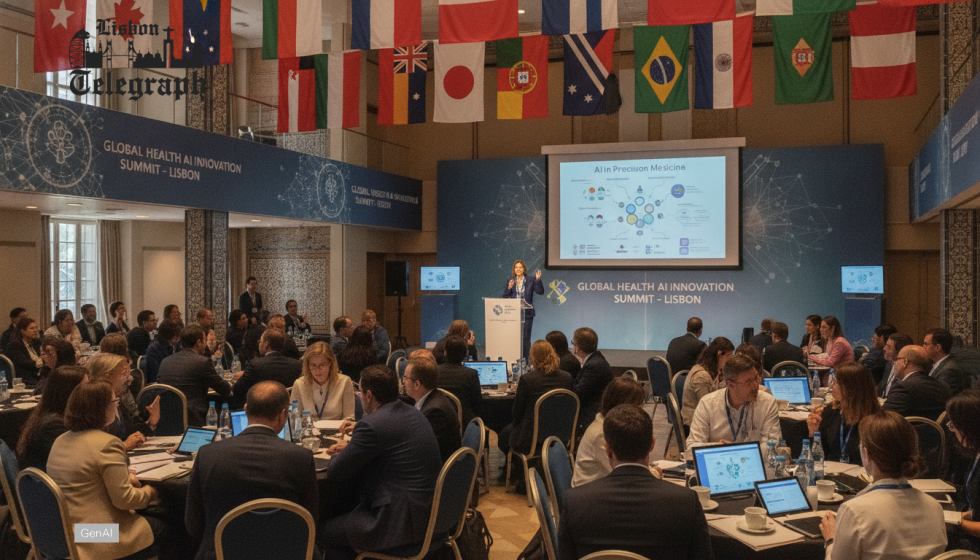
How the Lisbon meetup aims to shake up global health systems
Lisboa is playing host to what organisers are billing as a World Health Organization pow-wow on AI governance in healthcare, with a roll call of delegates from 37 countries. The buzz, as indicated available reports, is around shared standards, safety checks, and rules to keep AI from turning into a digital divide monster. Instead of a tech showcase, sessions are said to focus on getting the basics right: real-world proof, transparency, monitoring. These common evaluation methods, according to WHO insiders, could cut down on redundant tests and help scrappy regulators catch up. The agenda ties data stewardship and ethics to trust, pushing for better health outcomes, not just prettier algorithms.
The chat, say session speakers, is all about safe AI across borders: validation before use, constant checks post-deployment, and nifty documentation for the frontline warriors—clinicians and admins. They argue that inconsistent buying and oversight breed care disparities, especially with data-deprived tech tools. And let’s not forget interoperability—it’s as crucial as performance for hospital networks swapping records, keeping global health systems intact. Governance threads are dipping into ethical debates, like those seen in AI in disarmament discussions.
Global health systems: standards, safety, and accountability
Lisbon’s agenda is hitting, as relayed delegates, on AI validation before patient interaction, with basic requirements such as bias testing and dataset details. They’re chewing over performance drift detection post-rollout when clinical paths change. Speakers are painting accountability as a vendor-to-clinician chainreaction. For global systems, loose oversight might spread dodgy tools while tight red tape could stifle innovation. WHO hands are calling for governance that’s not just highfalutin principles but actionable and checkable practices.
Procurement isn’t just about cents and dollars—it’s a safety ace, according to participants. Hospitals can demand standard docs like incident response plans in tenders. A session strand is centred on cybersecurity risks of connected clinical systems, with calls for consistent threat reporting to stack up countrywide comparisons. The grand aim is a global shared toolkit while keeping sovereign control over health pathways.
What 37 countries debated about AI oversight in Lisbon
Representatives from 37 countries are huddled together, bringing their A-team of ministries, regulators, and health tech savvies. They’re chatting about pathway protocols, monitoring, and handling AI-triggered grumbles. They’re mapping how data rules shape research pacts and vendor picks. Workforce readiness is on the radar too, training clinicians to second-guess AI underpins safety. Organisers say the meetup’s about a lingo makeover so non-specialists can digest evidence.
Resource struggles were a theme, especially for smaller regulators. There’s talk of national plans to build a shared baseline with room for local tweaks, all while noting that Portugal’s policy chats echo these issues, like in education aid talks.
Practical reforms that can shake up global health systems
A key line, according to WHO insiders, is that beefed-up governance should result in less diagnostic lag, safer triaging, and slicker resource managing. WHO parties reckon unified records and evaluations are key to broad performance. Participants have tossed around shared benchmarks to save smaller places from double-testing. They’ve called for clear audit processes and model update logs. Multilingual patient info and informed consent were flagged as trust builders.
Speakers linked transparency and resilience repeatedly in briefings, citing the waste embarrassment during UK’s pandemic procurement as a wake-up call, flagged in a Covid waste report. The bottom line for global health is tight, crisis-proof governance with nailed-down roles and honest public comms.
Next steps for AI governance and global health systems
WHO folks are pushing for clearer rules on clinical proof, risk management, and patient chats as AI gains traction. They’re exploring shared assessment techniques without spilling secret data. Liability assignments when decisions span from clinicians to vendors are also under the spotlight. The mission, according to meeting honchos, is to make global health systems safer as AI goes mainstream. Participants note AI’s pace might outstrip legal frameworks, so there’s a call for nimble governance that retains oversight and transparency.
The summit wraps with calls for trackable implementation schemes, outlining who’s on the hook and when they’re due, reflecting interests seen in Portugal’s energy shift goals. WHO delegates stress long-term trust through openness and accountability as the ultimate take-home message for global health systems.