El Niño and Portugal: country preparations under scrutiny
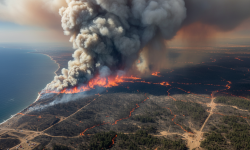
Portugal is treating the latest El Niño cycle as a practical trigger for risk planning across water, health, energy, and civil protection, according to updates from the Instituto Português do Mar e da Atmosfera (IPMA). In early 2026, briefings in Lisbon reportedly focused on how an El Niño phase can raise the odds of hotter heatwaves, rainfall volatility, and knock-on effects for supply chains and climate-sensitive services. The World Meteorological Organization mentioned that El Niño conditions emerged in 2023, and Portuguese agencies are using those global signals to stress-test domestic systems, officials suggested. The aim is to translate seasonal indicators into local decisions that can reduce losses from drought, wildfire, flash flooding, and heat-related illness, while considering underlying climate change trends.
Sector readiness for climate variability
Preparedness work has emphasized operations rather than messaging, according to people involved in planning. Municipalities have been asked to review drought and wildfire procedures, verify emergency logistics, and align local plans with Civil Protection protocols ahead of peak summer pressure, officials said. For context on how European institutions frame stress tests in other policy areas, see Catholic Church governance tested France end-of-life law.
Ministries have also linked climate risk to broader resilience work, including infrastructure maintenance and cross-border coordination, because disruptions can cascade quickly during extreme seasons, according to stakeholders. A parallel track is public communication: officials have noted their goal is to provide clear guidance that avoids panic, counters misinformation, and helps households and employers prepare for heat and smoke episodes.
2026 to 2027 outlook and planning assumptions
Planning horizons in some contingency work extend into 2027, suggesting keeping options available if El Niño-related patterns persist or recur. Technical notes shared with stakeholders reportedly use IPMA monitoring to translate Pacific sea-surface temperature patterns into plausible scenarios for Portugal, including hotter heatwaves, altered storm tracks, and uneven rainfall distribution between regions and seasons. The Instituto Português do Mar e da Atmosfera has highlighted that impacts are probabilistic and should be expressed as ranges rather than certainties, according to its public messaging and briefings.
This approach supports reservoir rule curves, agricultural scheduling, and emergency staffing models. Planning exercises also test response capacity under compound events such as heat combined with wind-driven fire weather.
How IPMA monitoring supports early warnings
IPMA is central to turning global monitoring into local action, combining satellite products, ocean observations, and national station data to refine warnings for Portugal. Its briefings inform Civil Protection alerts and also support sector-specific guidance for farmers, water managers, hospitals, and grid operators, according to the agency. For broader context on how warming trends can intensify extremes over time, UNEP’s Emissions Gap Report 2023 summarizes global pathways and risks.
Forecasters are watching for compound events such as prolonged heat that dries fuels followed wind episodes, or intense rain on hard soil that raises flood risk, according to operational forecasting practice described in stakeholder updates. A related challenge is communicating uncertainty without diluting urgency, prompting IPMA to expand technical notes and stakeholder calls during high-risk periods.
Long-term adaptation measures beyond 2027
Portugal’s longer-range response is being shaped around practical adaptation that reduces exposure whether a season is wetter or drier, as indicated policy discussions and sector plans. Water policy prioritizes leakage reduction, reuse projects, and demand management, while land management focuses on fuel breaks, mosaic landscapes, and protection of peri-urban zones, officials have said.
El Niño climate impact remains a planning input, but there is an emphasis on resilient systems that perform under wider climate variability. Related cooperation and investment planning is tracked in Portugal-Angola relations deepen to boost investment and Angola energy hub plan: LNG, power links, investment. Energy planners are also considering how hotter summers might increase peak electricity demand and strain cooling-dependent services, especially during drought-constrained hydropower seasons.