Greece Moves to Restrict Social Media
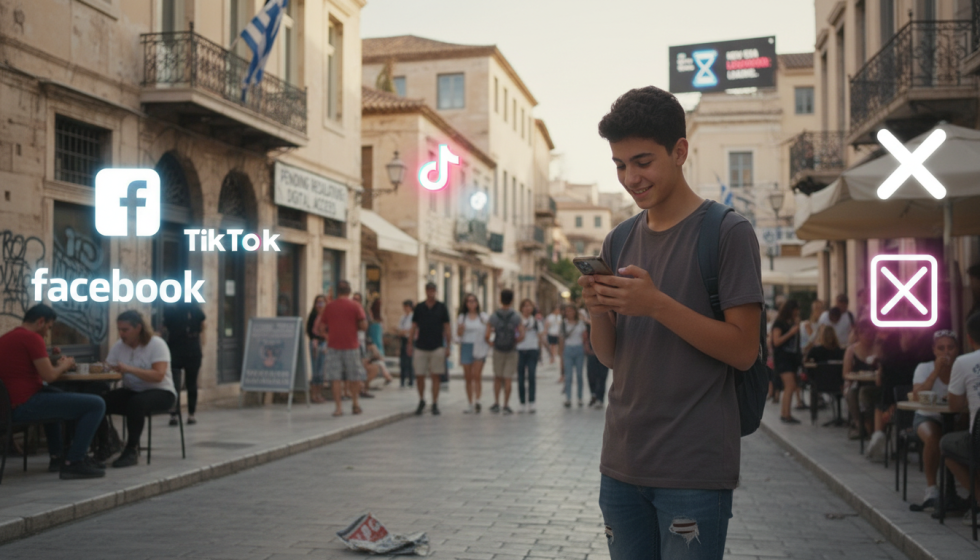
Greece has confirmed plans to impose a Greece social media ban for users under 15 from next year, turning a political pledge into a concrete regulatory timetable. Today, ministers framed the move as a safety measure that prioritises safeguarding over convenience, signalling tougher compliance expectations for platforms operating in the Greek market. The proposal centres on enforceable age assurance, clearer liability for services that fail to act, and stronger tools for parents and schools to manage access. While details are still being finalised, officials have pointed to a stepped rollout so companies can adjust systems before enforcement begins. Live debate in Athens has focused on whether the measure will be implemented through national legislation alone or aligned more tightly with EU level rules to reduce loopholes.
In parallel, Greece is presenting the policy as a test case for wider European digital policy, arguing that coordinated standards are needed to keep pace with fast changing platform design. An unrelated UK report on phone snatching has been cited in some commentary as a reminder of how quickly youth focused harms can scale when smartphones are central to daily life, even though the Greek measure targets apps rather than devices. Today, officials also stressed that penalties will not be symbolic, with credible sanctioning powers intended to drive platform behaviour. The next public Update from the responsible ministries is expected to clarify which services fall under the ban, how age checks will be verified, and what exemptions could apply for education or messaging.
Comparison with Other European Nations
Across Europe, youth internet restrictions have accelerated, but Greece is positioning its approach as more direct pairing an under 15 social media age limit with enforcement mechanisms rather than guidance alone. Several EU countries have pushed for stronger age assurance and safer design duties, while others have leaned on school phone rules or parental controls. The Greek plan is being discussed against EU wide frameworks such as the Digital Services Act, with Athens arguing that harmonised expectations could stop underage users from simply moving across apps that interpret rules differently. Live reactions from European regulators have highlighted the difficulty of defining social media in law, especially where games, messaging, and video platforms converge. The government’s stated aim is to avoid a patchwork, while still acting quickly enough to respond to what it calls an urgent public health and child protection issue.
Implications for Young Internet Users
For teenagers and families, the practical effect hinges on how the social media age limit is verified and how appeals work when accounts are wrongly restricted. The government has suggested that age assurance will combine platform duties with credible checks, though it has not committed publicly to a single technical method. That matters because overly intrusive verification could raise privacy concerns, while weak checks can be bypassed with ease. The Greek stance is that the balance should tilt toward protective defaults for minors, with clearer accountability on services that nudge young users into endless feeds. An external account of the developing proposal has been tracked through reporting such as this BBC coverage at BBC reporting on Greece’s planned under-15 restriction. The next Update is expected to address school age users who rely on platforms for clubs, sports teams, and community coordination.
Public Reaction and Debate
Public reaction has split along familiar lines, with supporters emphasising child welfare and critics warning about enforcement overreach. Parent associations and some educators have welcomed the move as a practical backstop when household rules fail, arguing that platforms are engineered to keep attention and should face higher duties of care. Others, including civil liberties voices, have raised concerns about normalising identity checks for routine communication and about pushing minors into less visible corners of the internet. Live talk shows in Greece have featured technologists warning that bans can prompt workaround markets, while youth advocates argue that digital literacy and platform transparency should be strengthened in tandem with restrictions. The government’s communications have tried to keep the focus on measurable harms, including exposure to harmful content and patterns of compulsive use, while promising to refine the law after consultation.
Future of Digital Policy in Europe
The Greek decision is also being read as an attempt to influence the next phase of European digital policy, where child protection is increasingly central to regulation. If Athens delivers a workable model for enforcement that respects proportionality, it could become a reference point for other capitals weighing similar rules. Policymakers in Portugal are watching the debate closely as their own domestic agendas often intersect with safety and compliance questions, illustrated the wider governance focus seen in coverage such as policing and public order pressures in Lisbon and Portugal’s push for stronger road safety measures. Greece’s message is that regulation must keep pace with product changes, not chase them. Live legislative drafting over the coming months will determine whether the ban becomes a narrow tool or part of a broader shift toward mandatory safer design for minors across the EU.