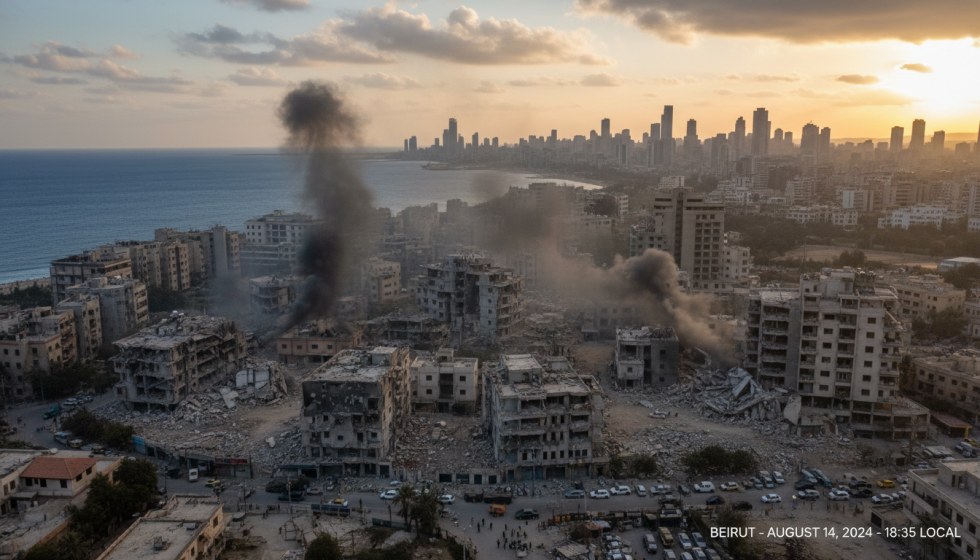
Chronology of Recent Air Strikes
Israel Lebanon air strikes expanded into a broad wave across several Lebanese districts, with successive strikes reported over a short span that suggested coordinated tasking rather than isolated incidents. Reporting from regional desks described multiple target sets hit in quick sequence, while Lebanese outlets tracked loud detonations and secondary blasts in some areas. Today, the pattern of activity pointed to repeated sorties and follow on munitions, with residents in different localities describing the sound of aircraft overhead and rapid emergency response. A Live picture emerging from local correspondents and wire services focused on the timing, the spread of locations, and the immediate disruptions on roads and in neighborhoods. An official Update cycle from authorities and media outlets continued as details were verified.
US-Iran Ceasefire Context
The wave unfolded as the US-Iran ceasefire dominated regional diplomacy, creating a sharp contrast between de escalation messaging and kinetic activity on the Lebanese front. Observers noted that ceasefire language can reduce direct US-Iran friction without automatically cooling connected arenas, where local calculations and deterrence frameworks operate on separate tracks. In that environment, a Live regional news agenda also tracked energy and market sensitivity to the ceasefire narrative, including a market focused angle referenced in coverage of ceasefire driven market moves as an indicator of how quickly sentiment shifts. Today, officials and analysts framed the ceasefire as a ceiling on escalation between Washington and Tehran, not a blanket freeze. An Update to diplomatic contacts and security briefings emphasized continuity of communication even as strikes and alerts persisted.
Impact on Beirut and Surrounding Areas
Beirut attacks were not uniformly reported in every dispatch, but the capital remained central to the public anxiety and operational planning that followed the wider strike wave, particularly as transport arteries and services calibrate to sudden security shocks. Residents described intermittent disruptions, changes to school and work routines, and a heightened presence of emergency and municipal teams in some districts. The Middle East conflict context mattered because perceptions of risk often travel faster than confirmed strike locations, shaping traffic flows and crowd behavior across greater Beirut. A Live security posture emerged through checkpoints and advisories, while hospitals and civil defense services moved into readiness mode based on precaution and proximity to potential impact zones. An Update stream from local authorities focused on situational awareness, urging caution and emphasizing verification of information before action.
International Reactions and Responses
International reactions tightened quickly as diplomats weighed the strikes against ongoing efforts to keep broader tensions contained, with some governments urging restraint and others prioritizing the right to self defense narratives. Reuters reporting has typically stressed verification, sequencing, and official statements, while Al Jazeera often amplifies humanitarian and civic impacts alongside the political messaging, and both shaped how the story traveled. For wider audiences following Today’s developments, officials and monitors emphasized deconfliction channels and the need to avoid miscalculation, especially where multiple actors operate in close proximity. A Live monitoring posture was visible in public readouts and briefings, even when details remained limited or contested. An Update cycle from foreign ministries tended to focus on protecting civilians, safeguarding diplomatic missions, and maintaining contact lines that can prevent a localized event from driving uncontrollable escalation.
Future Implications for Regional Stability
The immediate implication for regional stability was the risk that sustained Israel Lebanon air strikes could harden retaliatory incentives and compress decision time for commanders on all sides, even if a US-Iran ceasefire holds at the state to state level. Analysts highlighted that a ceasefire can lower temperature in one channel while leaving other arenas primed for rapid shifts, especially when signals and counter signals are interpreted through deterrence logic. Today, the key variable for stability was whether the strike tempo continues, pauses, or becomes more geographically concentrated, each outcome shaping diplomatic bandwidth and civilian resilience differently. A Live risk assessment among security watchers centered on spillover to infrastructure and the potential for misreading intent during high alert periods. An Update to the regional outlook depended on credible information, disciplined messaging, and measurable reductions in operational activity rather than rhetoric alone.