Kim Jong Un’s Controversial Orders
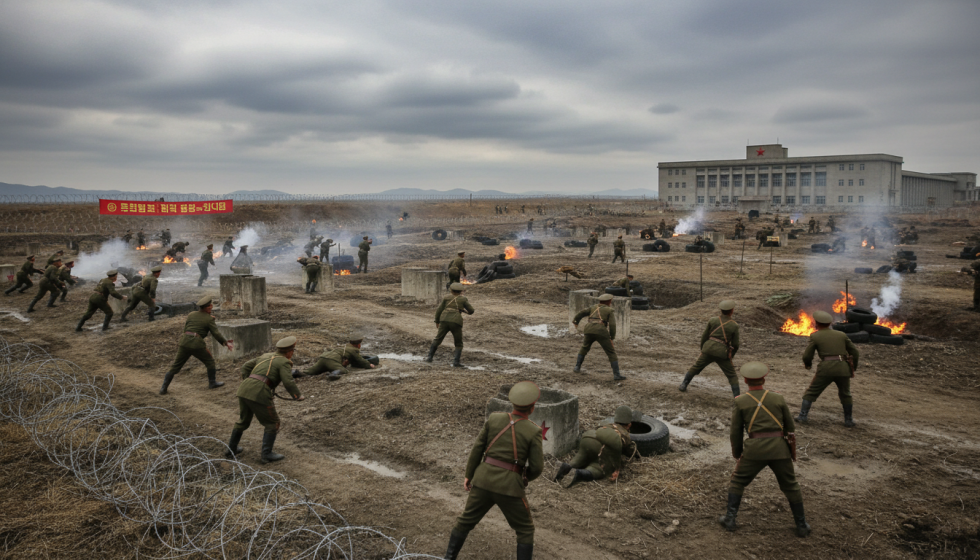
Pyongyang is again projecting a hardline message to the battlefield, after state media carried remarks praising soldiers who died rather than be taken prisoner. KCNA quoted Kim Jong Un commending fighters who used self-blasting grenades to avoid capture, presenting the act as proof of discipline under pressure. In Today’s briefings, analysts tracking North Korea military tactics said the language signals encouragement of extreme denial of intelligence and identification if troops are cornered. South Korea’s Ministry of Unification has repeatedly cited KCNA messaging as a window into the leadership’s priorities, and it flagged the tone as unusually explicit. Live monitoring groups in Seoul noted that the rhetoric elevates suicide as a battlefield tool, not only a personal choice.
Impact on Ukraine Conflict Dynamics
Ukrainian commanders are weighing what the narrative could mean for detention, screening, and tactical questioning in contested areas, even if the scale of any North Korean presence remains unclear. A rolling Update from observers at the United Nations frames the wider concern as proliferation of practices that increase civilian and prisoner risk; the UN has also stressed norms around humane treatment in armed conflict in other security contexts, including its report on Central Asia nuclear weapon free zone. Within Live discussions among military lawyers, the emphasis is on how praising self-destruction can complicate efforts to secure surrenders and recover wounded personnel. For readers tracking diplomacy as well as security, Pope Leo XIV, as covered in Pope Leo XIV presses EU to unite for peace now, has also pushed political leaders to prioritize conflict de-escalation Today.
International Reactions to the Tactics
Seoul’s National Intelligence Service has previously briefed lawmakers on North Korean doctrine and propaganda themes, and officials there argue that celebrating battlefield suicide is designed to harden units against capture and defection. In Washington, the U.S. State Department has repeatedly criticized North Korea’s human rights environment and its militarized indoctrination, and diplomats are expected to raise the messaging in upcoming consultations on the Ukraine conflict. European officials, speaking on the record in national parliaments, have tied escalation risks to any external force posture that normalizes violations of the laws of war. For regional context on cross-border security pressure, Lisbon Telegraph’s coverage of Brovdi Drone Campaign Targets Russia key assets has been cited in Live briefings about how tactics evolve under sustained strike campaigns. An Update from Japan’s Cabinet Office spokesperson also stressed deterrence coordination.
Historical Context of North Korea’s Strategy
The current messaging fits a longer pattern of elevating ideological commitment as an operational requirement, rather than focusing purely on battlefield results. Researchers at the Korea Institute for National Unification have documented how state narratives reward “martyrdom” language to reinforce unit cohesion and to deter surrender, especially during periods when the regime highlights external threats. In that context, Today’s broadcast framing does not read as accidental rhetoric, but as instruction that can shape training and discipline. Analysts who track North Korea military tactics say the emphasis on self-elimination also signals fear of what captured soldiers might reveal, including unit composition and chains of command. Live commentary on regional security channels has also linked the theme to internal control, where loyalty tests are made public to set expectations. Another Update from Seoul-based monitors noted parallel themes in past anniversaries and military commemorations.
Potential Consequences for Future Warfare
If commanders internalize this messaging, the immediate consequence is a higher likelihood of last-ditch detonations in close combat, which increases risk to opposing troops attempting to accept surrender and provide medical aid. Military ethicists at established war studies programs warn that institutional praise for suicide acts can blur the line between combatant conduct and coercion command, raising accountability questions in any future investigations. Today, governments supporting Ukraine are focused on limiting spillover and on keeping prisoner exchanges and identification processes functional, and any trend toward self-destruction would undermine those channels. In Live operational terms, units may adjust standoff distances, search procedures, and casualty recovery methods to reduce exposure to explosive triggers. An Update in policy circles is that deterrence messaging could spread beyond one theater if it is perceived as effective, prompting countermeasures that harden battlefields further.