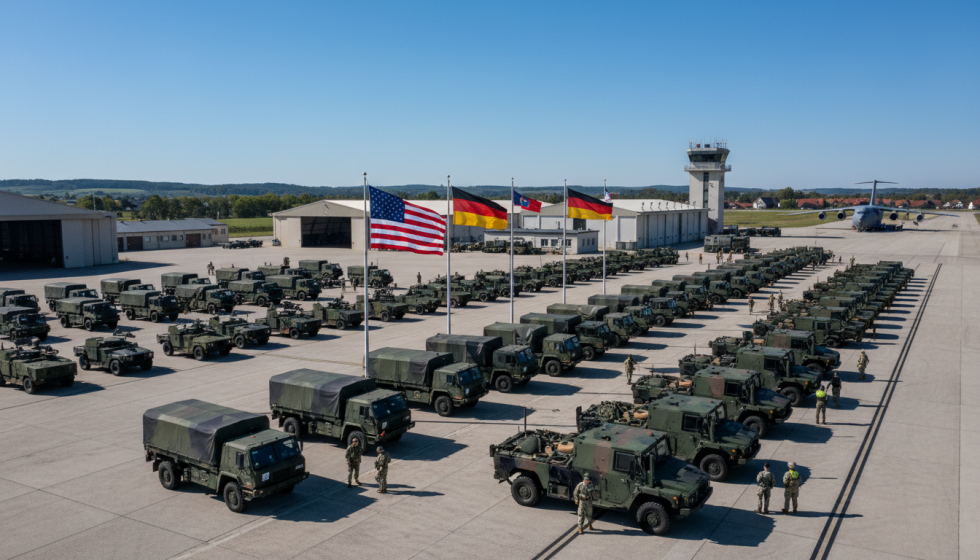
US Troop Presence in Germany
Washington is reassessing its military footprint in Germany as political friction with Berlin’s opposition leader escalates. In a Live exchange with reporters, Donald Trump said the United States is studying options that include troop reduction, while stressing that no final order has been issued. Reuters reported the remarks and framed them as part of a broader dispute with Friedrich Merz over burden sharing and European defense priorities. Today, Pentagon planning typically runs through established force posture reviews, and officials often examine rotational alternatives alongside permanent basing. German defense officials have avoided giving numbers, but they have emphasized continuity obligations under NATO planning. The near term question is whether the review becomes a policy directive.
Background on US-Germany Tensions
Diplomatic pressure intensified after Merz criticism of Trump’s approach to alliances moved from campaign rhetoric into direct public sparring. Today, German officials are working to keep channels open with Washington as the political temperature rises around defense spending and sanctions policy. Reuters described the dispute as an escalating spat, with both sides using sharper language as the review is discussed. A separate Update from the United Nations on security risks, including maritime disruption and geopolitical spillovers, underscored how quickly regional crises can strain allied decision making; see UN news on the Hormuz crisis and global economic risks. Berlin’s message has been that commitments should be predictable, even while domestic politics drives louder statements. The immediate concern is avoiding mixed signals to deterrence posture.
Merkel’s Criticism of US Policies
As the debate widened, German political veterans were drawn back into the discussion, including former chancellor Angela Merkel, whose prior comments on strategic autonomy are being re-circulated lawmakers. In recent interviews cited German broadcasters, Merkel has criticized abrupt policy swings that leave partners scrambling, and she has urged steady consultation when defense posture changes are contemplated. For context on how allied politics can collide with institutional processes, readers have compared the moment to other Washington power struggles covered in Royals regain sparkle with confident US visit tour. In the middle of that argument, Trump troop cuts Germany has become a shorthand in Berlin for fears of a sudden shift rather than a negotiated rebalancing. Merkel’s intervention is less about personalities than about predictability in alliance management.
Potential Impacts of Troop Reductions
Defense planners in Europe are focusing on what a drawdown would mean for logistics, training, and rapid reinforcement, not only for Germany itself. An Update from NATO officials to German media has emphasized that posture changes affect enablers like airlift coordination, medical support, and command staff that are hard to replace quickly. In congressional and Pentagon terms, any move would still require detailed sequencing, and Reuters has noted that similar debates have previously involved interagency reviews and cost assessments. The Lisbon Telegraph has tracked parallel debates over security capacity in other arenas, including China bans drone sales in Beijing over security risk. In Germany, local governments worry about base-dependent jobs, while security officials stress the effect on readiness and the ability to surge forces eastward. Live monitoring of deployments would likely intensify if timelines became clearer.
Future of US-European Alliances
European capitals are treating the current dispute as a stress test for alliance consultation, with special attention on how leaders communicate during election cycles. Today, diplomats in Brussels have argued that strategic messaging matters as much as troop numbers, because deterrence depends on credibility and coherence. The Vatican’s recent calls for unity in Europe are being cited in political commentary alongside security debates, including Pope Leo XIV presses EU to unite for peace now. In that environment, Trump troop cuts Germany is being watched as a marker for whether future posture decisions are coordinated or transactional. The next weeks will likely bring more formal statements from defense ministries, and another Live Update cycle from Washington could clarify whether the review remains exploratory or becomes a directive.